

Overall Summary
This data is for Group 4, which was composed of Caleb Valentino, Madeleine Goldberger, Losh Li, and myself (Zoe Roettger). Our group used the shallow above-ground firepit, and we worked with beef femur, oxtail, and splanchna for the first part of lab. For the second half, we created three ash altars of varying ingredients with the ash and liquids available.
Ritual Lab: Part 1
For this first part, we were responsible for burning a beef femur and oxtail as completely as possible on our woodpile, which was built to resemble the stacked piles that we had studied in class. We also roasted splanchna (liver, heart, and two kidneys) over this fire using a stick-kebab tool.
We had some difficulty at the very beginning with designing our woodpile structure and keeping our fire lit. Due to the shallowness of our firepit, we ended up going with a 3×2 structure, which we thought would provide the most stability for balancing our femur and tail on top of it. In the end, it did stay stable for the entire burn!


Before burning/roasting our various meats, we measured the weight and size of each part, which is listed in the table below:
| Type of Meat | Weight (lbs.) | Length (in.) | Width (in.) | Thickness (in.) |
| Beef Femur | 3.79 | 16 | 7 (left end) 6 (right end) | 7 (thickest part) 1.5 (middle) |
| Tail | 3.09 | 18 | 7 | 14 (thickest part) 6 (end of tail) |
| Kidneys (2) | 0.48 | |||
| Heart | 0.53 | |||
| Liver | 0.63 |


The Oxtail
Soon after placing the tail on the fire, it began to curl. This seemed to be the most exciting part of the lab as evidenced by the other groups’ flocking to see our tail, possibly because the majority of the tail-curling occurred so quickly. We also did not see much sign of failure, so stress levels in our group were relatively low during oxtail portion.
The dotplot below reflects this speed (though I will caution that most of the measurements were estimated and based off of a video, which is included as a timelapse).
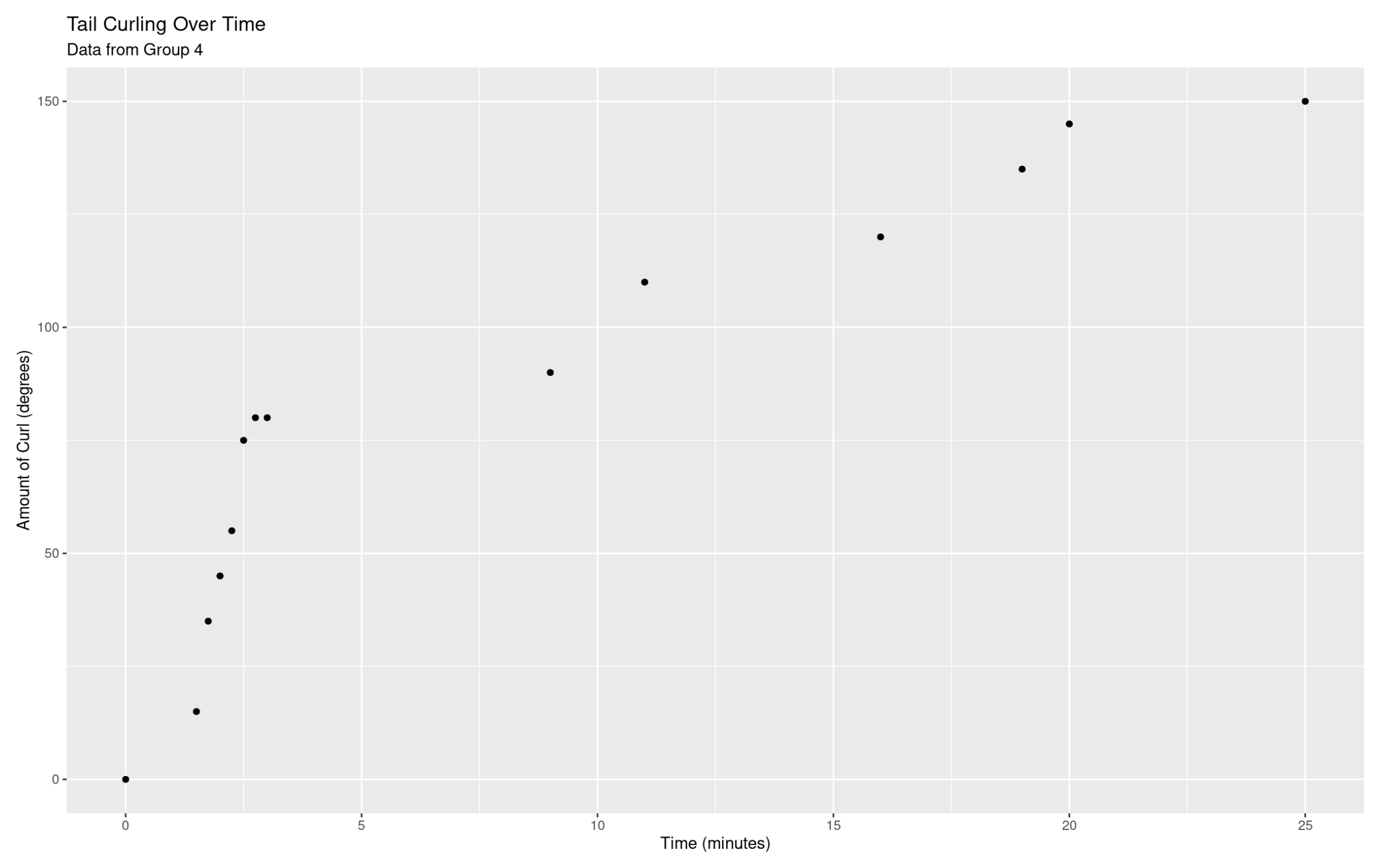
After the first three minutes, the tail’s curling slowed down, causing our observations to be more spaced out as we focused on the beef femur and preparing the splanchna. After 28 minutes of burning, the tail, which had already curled to almost 180° to touch the end of the tail to the “butt” portion, finally collapsed.


The Beef Femur
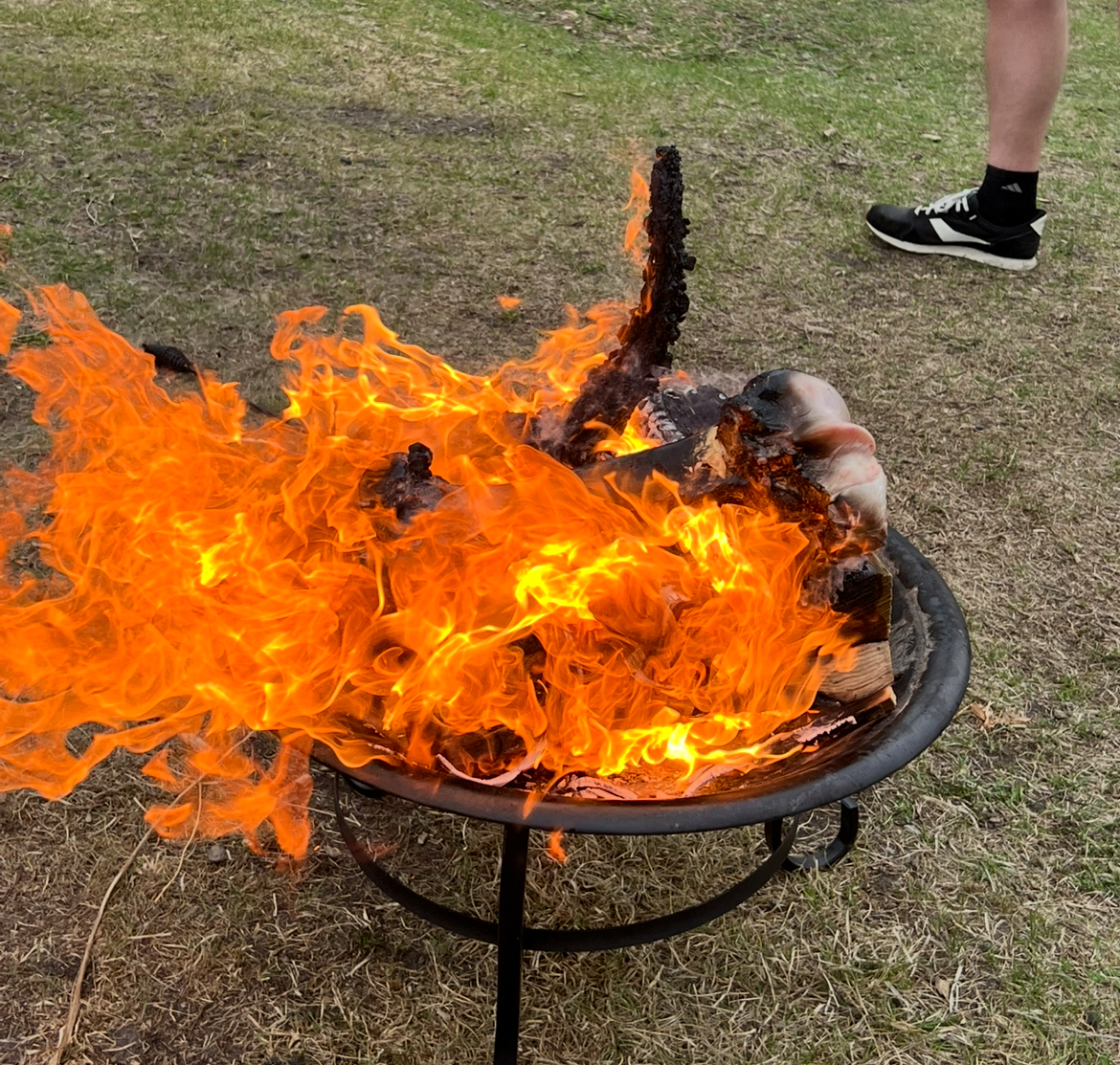
We were not able to collect as much data for the beef femur as we were unable to temp the meat without melting the thermometer. So, most of our data relied on visual observations over time.
We noticed that the fat from the femur began melting off as a black substance soon after we placed it on the woodpile – this was possibly the “dank ooze” as mentioned by readings, and it certainly did inspire a feeling of dread that was not present when we were watching the tail curl.
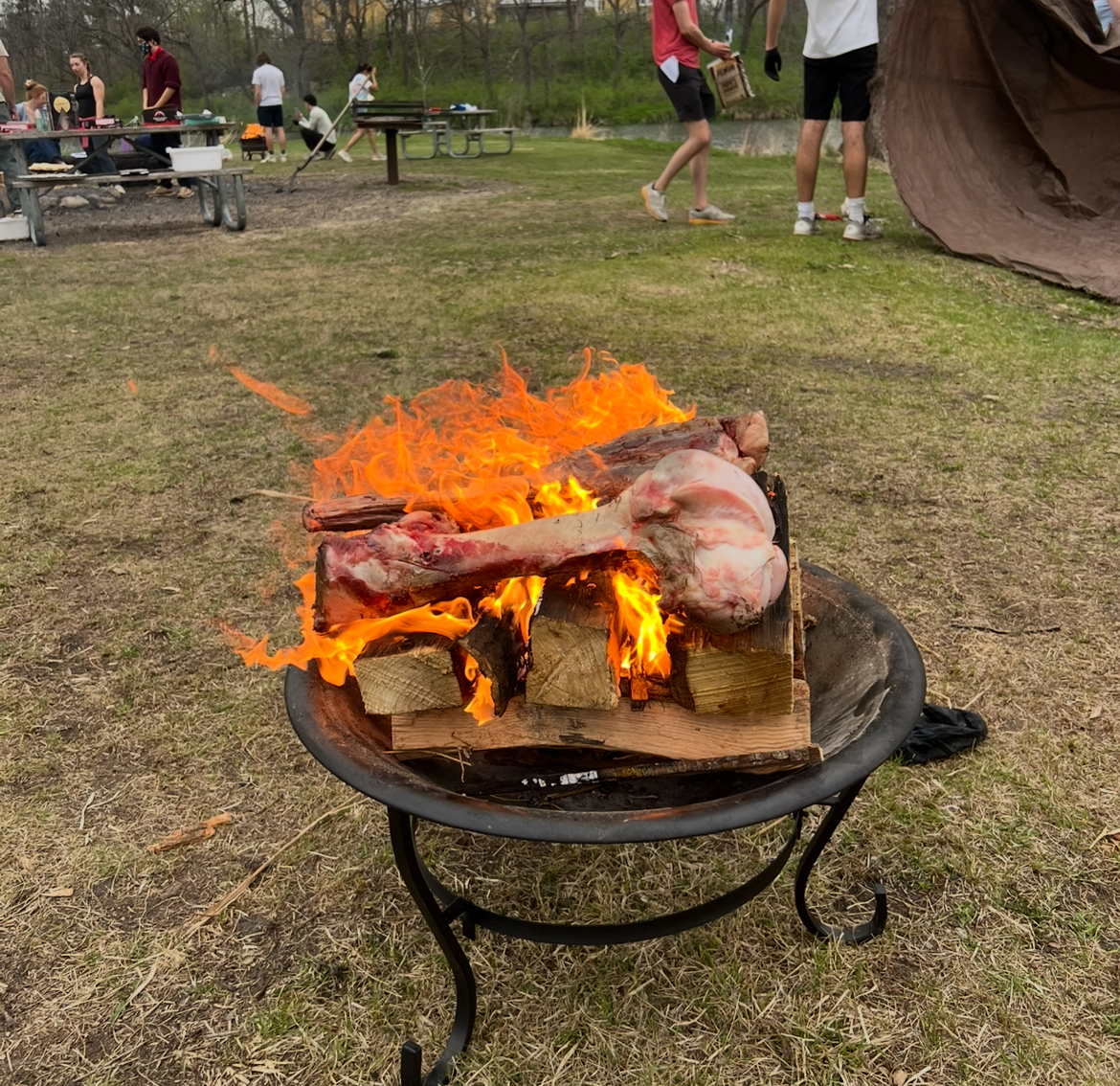


Because the right part of the bone was not fully in the fire, it did not burn as completely as the rest of the femur. Additionally, the area where the bone did crack occurred only where the bone calcined (turned white and blue).
The Splanchna
We chose to roast the splanchna (liver, heart, and kidneys) in their whole form without cutting them. This ended up making the cooking portion quite difficult as we were unable to fully cook the larger organs, like the heart and liver. Additionally, we could not take the temperature of the kidneys due to their size, so their temperatures after the initial temperature-taking prior to placing them on the fire could not be collected and were not included in the dotplot below. Overall, this all unfortunately meant that our organs were still rather raw and inedible when we took them off of the sword-kebab-stick.
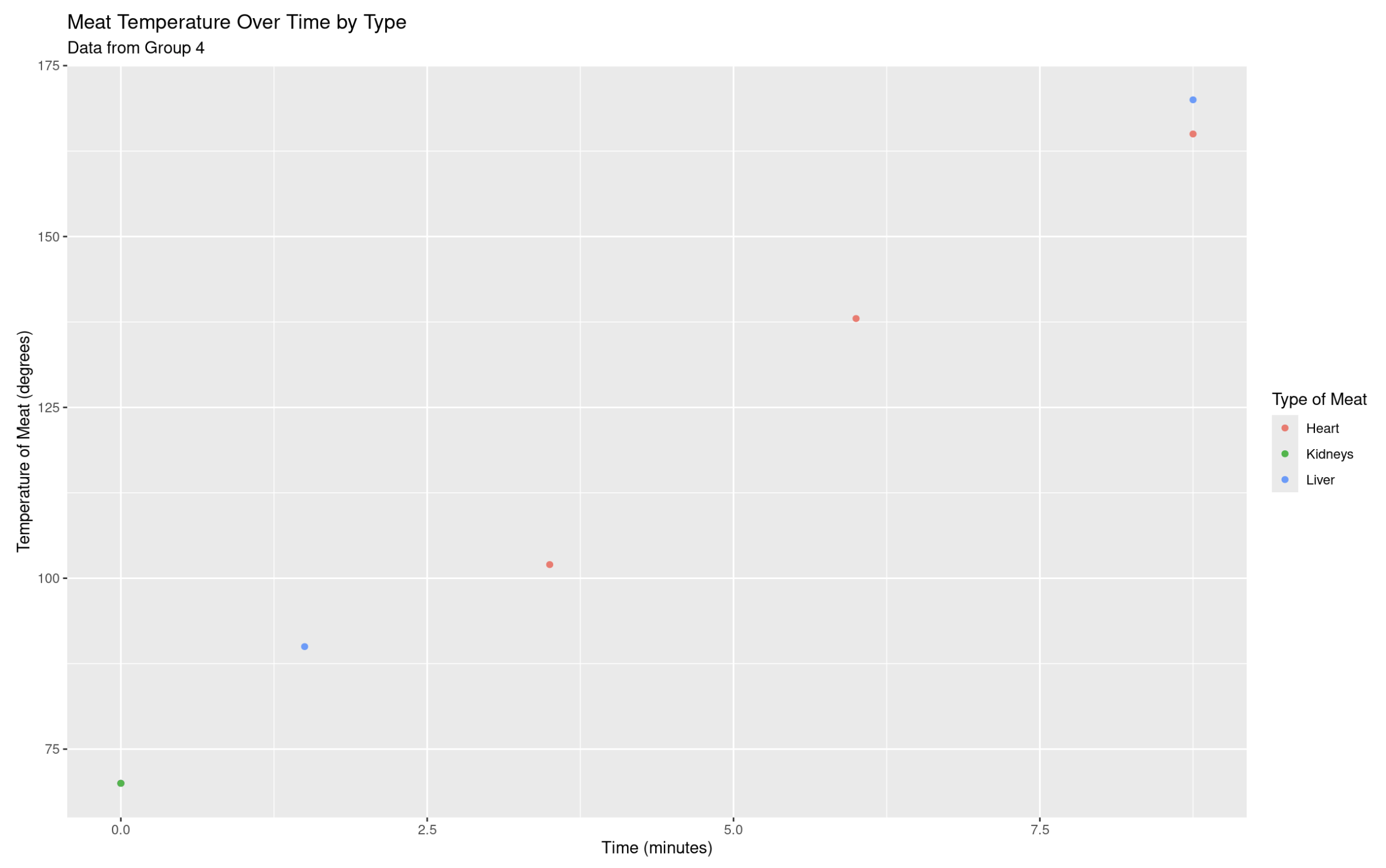
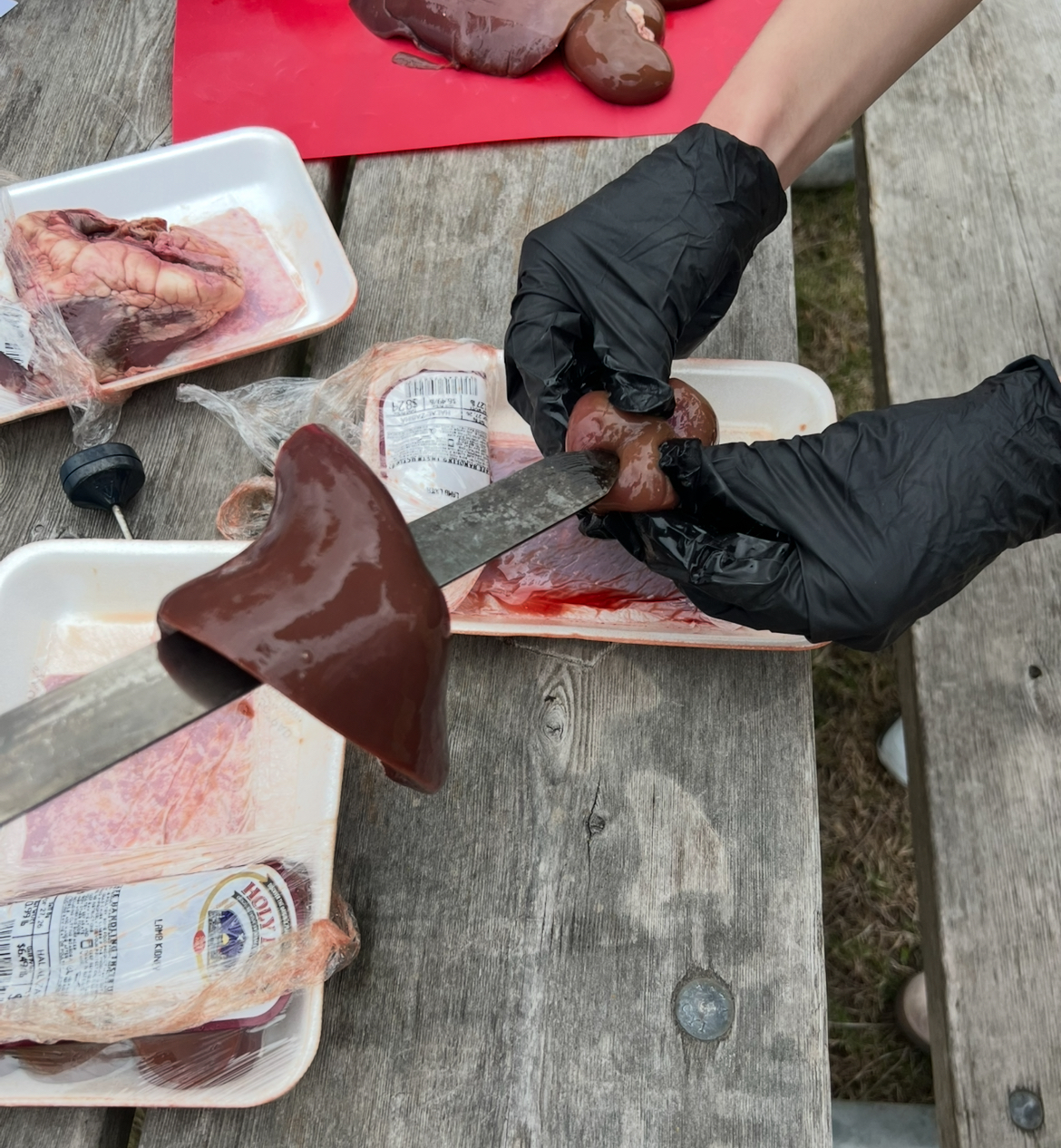

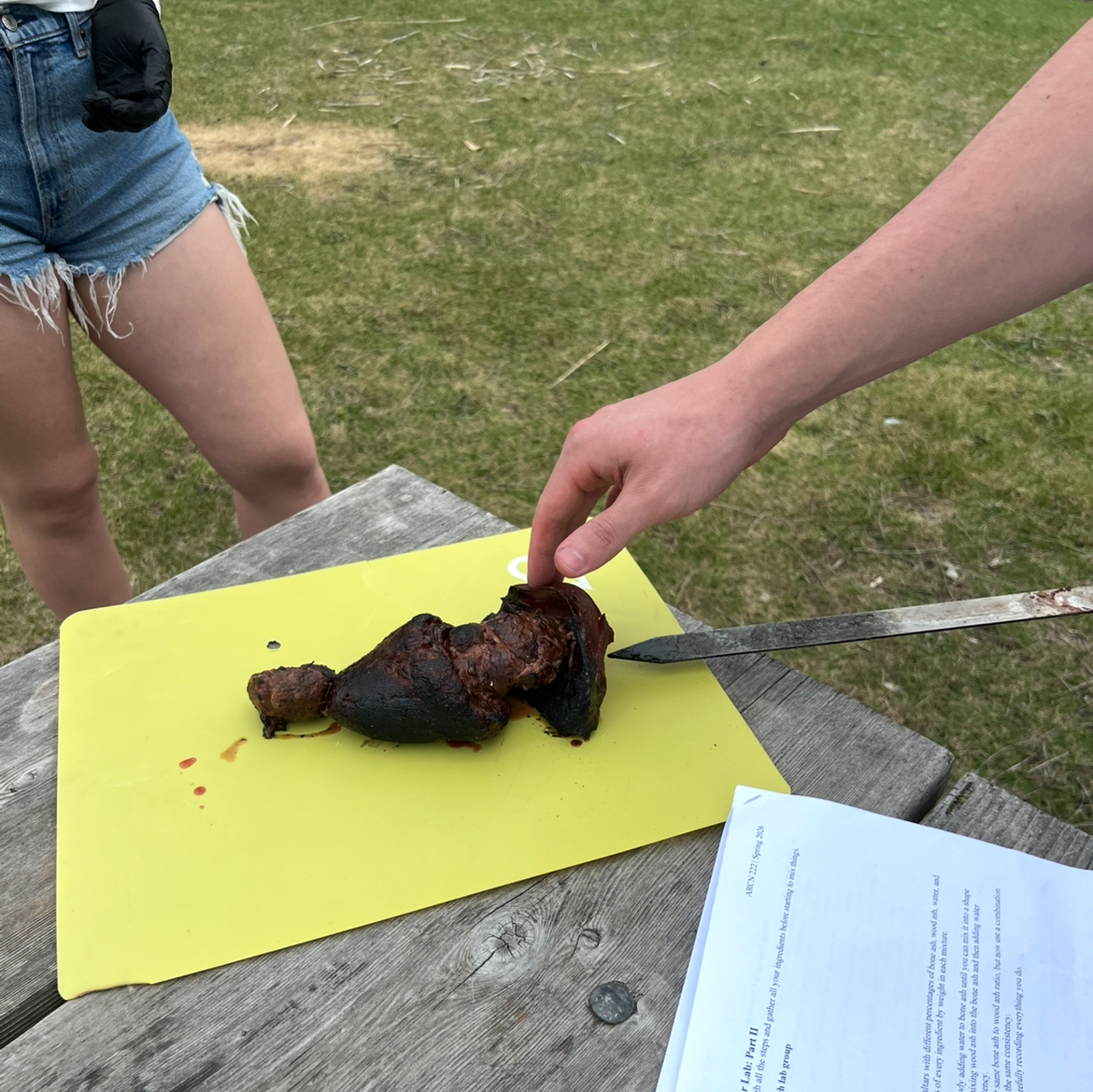

While I did not eat much of our group’s meat due to its rawness, Group 2’s meat was more fully cooked (possibly because they chose to cut the splanchna into pieces), and some organs, like the kidneys, tasted surprisingly sweet. Other moments of note included dousing the fire with wine, which smelled shockingly good!
Final Measurements for Part 1
After burning, we measured the weight of the tail and femur, which came out to 2.55 lbs, as compared to the original 6.88 lbs of the two combined. We likely did not collect all of the bones as they tended to blend in with the burnt wood, but I do think that this difference is distinct enough to show that a large percentage of the femur and tail were completely destroyed.
Ritual Lab: Part 2
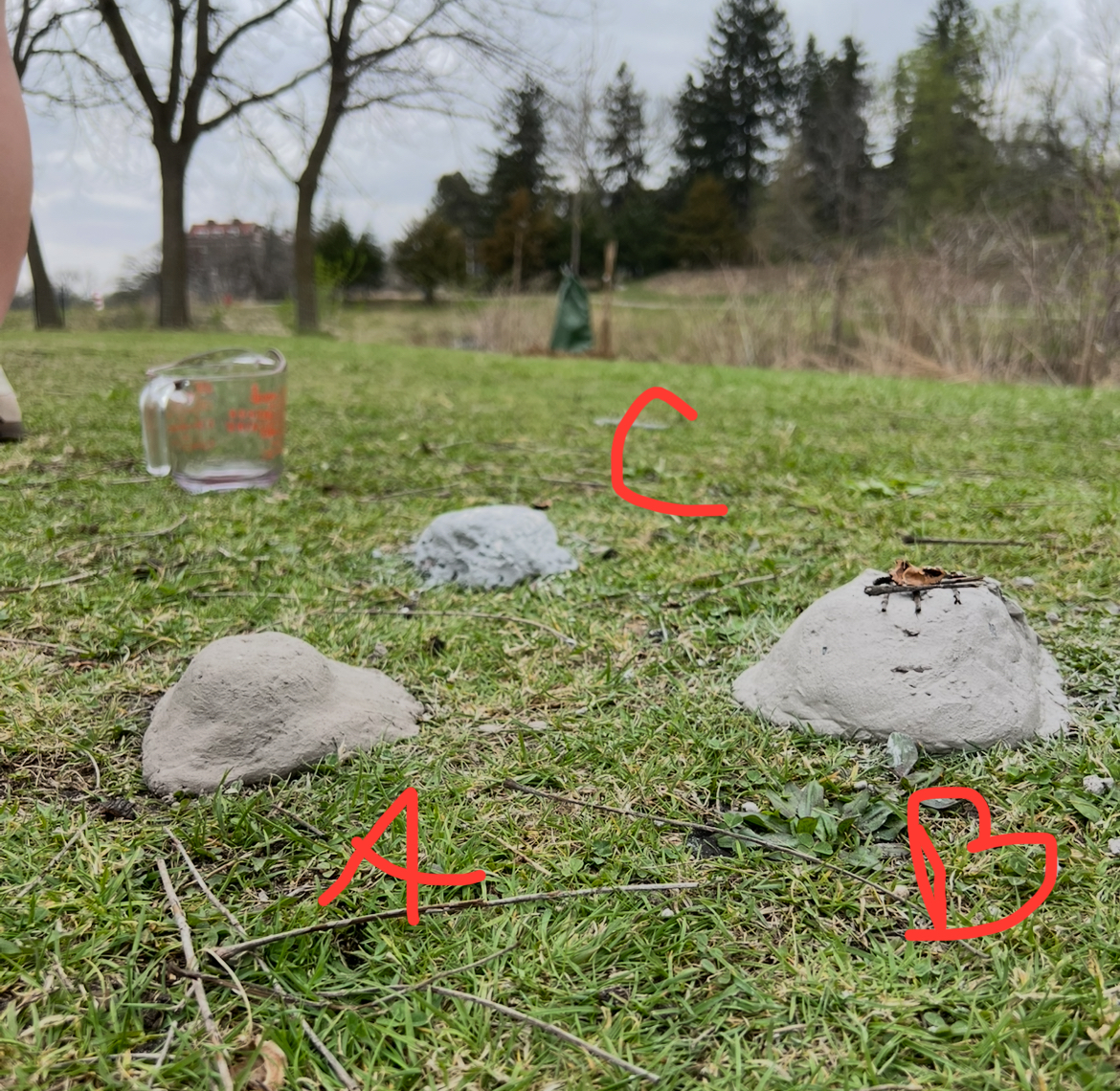
For Part 2, we created three ash altars from various combinations of ash (bone ash, “pure” firewood ash, “rained-on” firewood ash, and/or our ash from Part 1) with liquids (red wine and/or water).
Altar A
- Base: 1/2 cup bone ash, 1 cup “pure” fireplace ash
- Added 1/4 cup wine -> became somewhat chunky
- Added 1/2 cup wine -> gained a clay/cement-like consistency
- Added 1/3 cup wood ash -> became much drier and harder
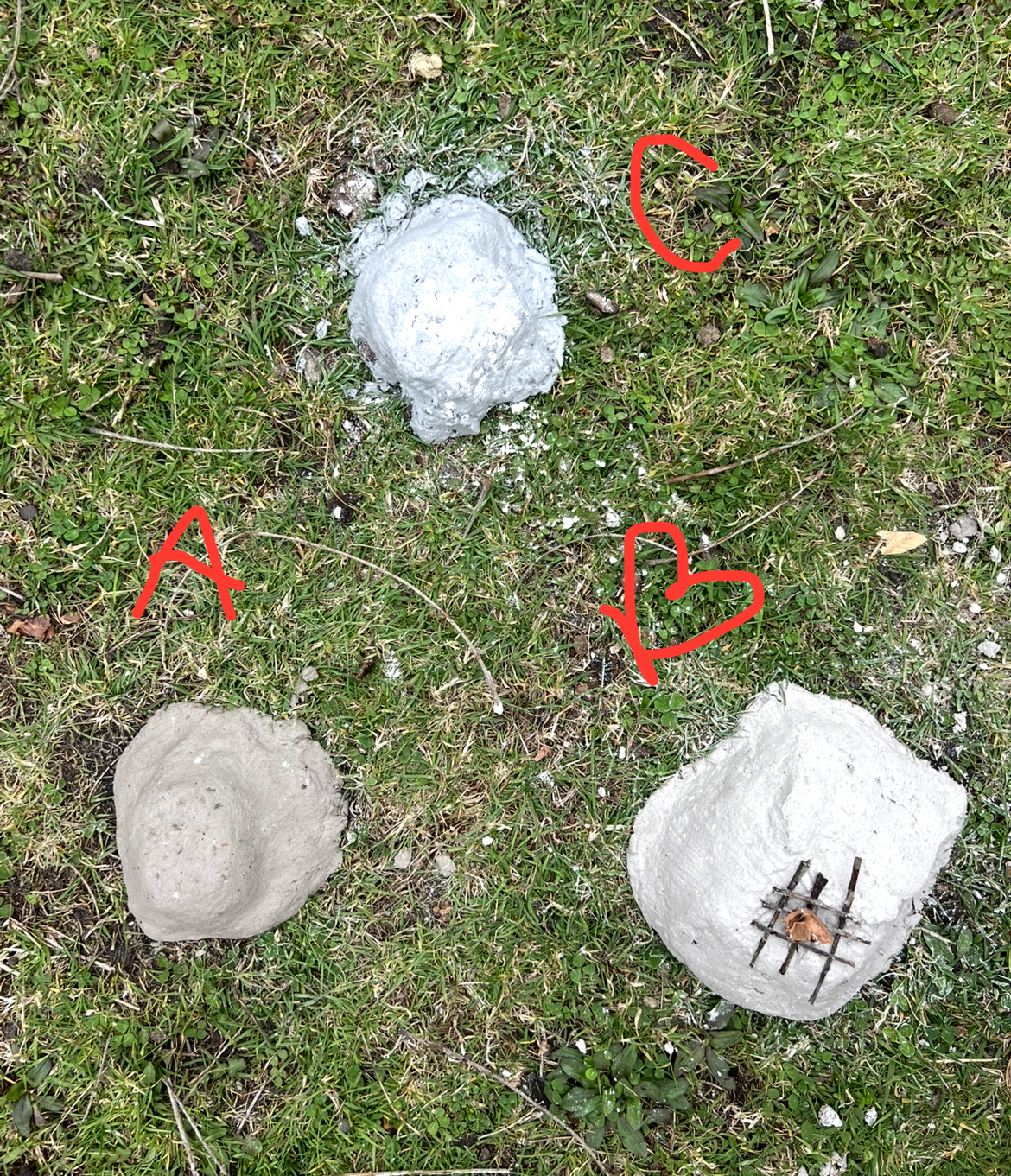
- Final Result: a flat yet springy light grey altar that quickly dried out into a hard structure

Altar B
- Base: 1 cup bone ash, 1/2 cup “rained-on” fireplace ash
- Added 1/2 cup wine -> became very wet, to the point where it almost resembled a liquid
- Added 1 cup bone ash and 1/4 cup water -> became really sticky, did not hold together
- Added 1/2 cup “rained-on” fireplace ash -> became more solid
- Added 1/2 cup “rained-on” fireplace ash -> became fully solid and held its shape
- Added 1/4 cup bone ash -> became more solid, but also more crumbly
- Added 1 Tbls. of water -> went from a crumbly to a smooth consistency (large difference!)
- Final Result: a taller dark grey altar that could support sticks on top, but did not seem to dry out

Altar C
- Base: 1 cup our ash (from Part 1), 1/2 cup bone ash, 2/3 cup wine
- Added 1/4 cup bone ash -> solid but really soft and “smushy”
- Added 1/8 cup bone ash -> gained a blue color and held its shape
- Sprinkled more bone ash on top -> seemed to make no difference
- Final Result: a medium-tall blue altar that held its shape but did not dry out (felt like “slime”)
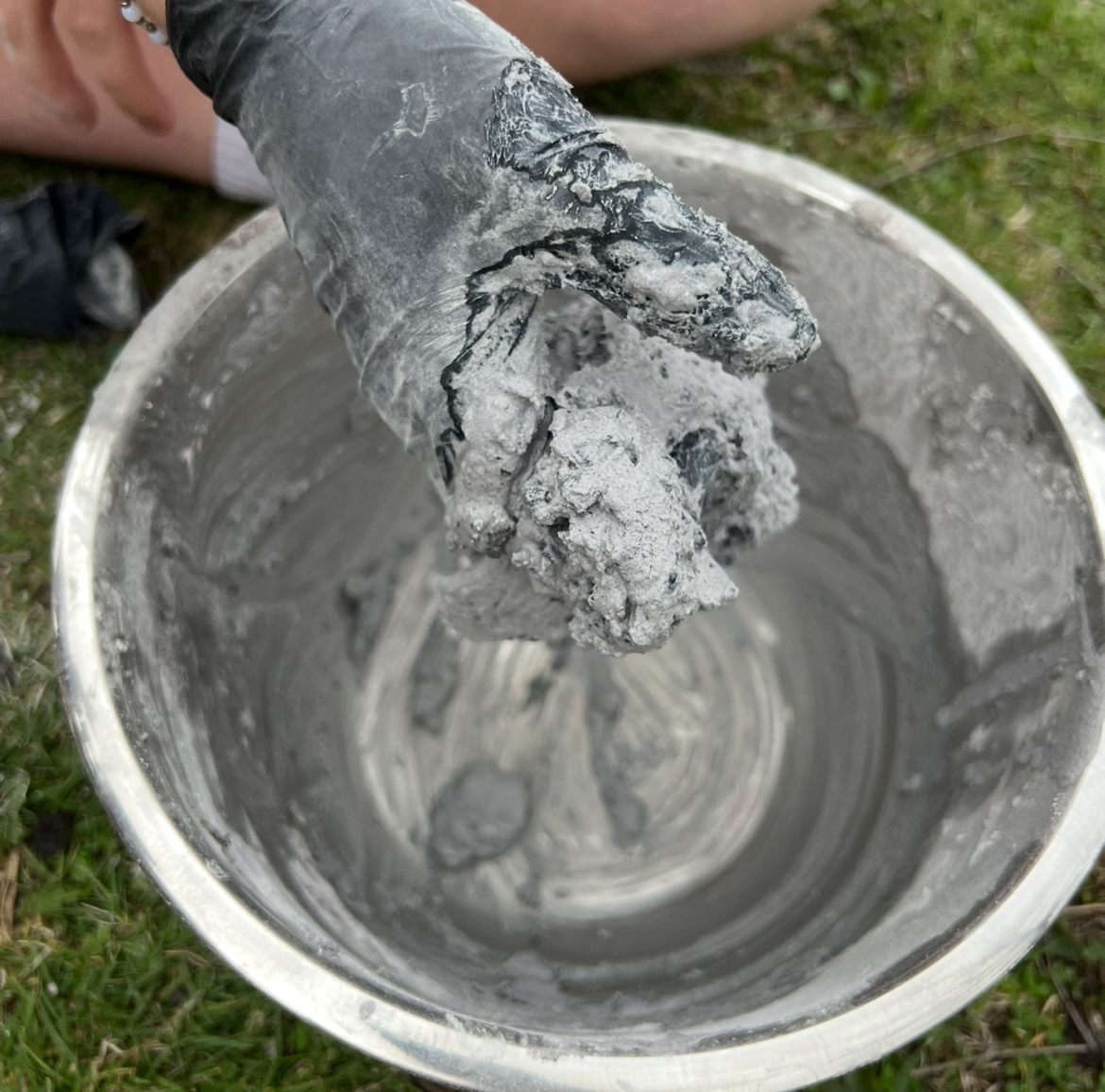
Final Notes for Part 2
Throughout this process, we noted that adding water tended to make the mixture more liquid-y, so we thought that wine was better. Our first structure also seemed the most solid, which was interesting as it was the result of our efforts to replicate what we thought the combination of materials on ancient altar may have been.

0 thoughts on “Lab Group Data: Ritual (Group 4)”