
In this lab, we aspired to gain a better understanding of the various factors that contribute to the process of dyeing wool.
On the first day of the lab (a preparatory phase of sorts) we mordanted our wool. Our group chose to use 87 grams of pre-spun dark grey wool (yarn), and 31 grams of curly, un-carded wool, this being light gray with relatively small patches of light brown and tan on some of the curls. We combined this wool with that of group 1, which had a combined weight of 233.33 grams. We then added all of the wool from both lab groups into a cast-iron pot filled with lukewarm water (72 degrees Fahrenheit). To this pot we then mixed in 35.4 grams of aluminum sulfate (roughly 15 percent of our total wool weight). Finally, boiling water was added to the pot incrementally while stirring throughout the lab period, with the goal of keeping the temperature of the mixture at around 160 degrees. While the lab period only went until around 12:20, the wool remained in the pot until around 4:00 pm. I took the temperature of the mixture at various intervals as allowed, and I have compiled my data in the following table. It should be noted that the rapid temperature increases in the dataset results of new rounds of boiling water being added.
| Mordant Process: Time vs. Temperature | |
| Time Since Boiling Water Added (Minutes) | Temperature (Fahrenheit) |
| 0 | 72 |
| 1 | 180 |
| 2 | 120 |
| 15 | 118 |
| 20 | 108 |
| 25 | 160 |
| 30 | 132 |
| 35 | 122 |
| 37 | 120 |
| 43 | 141 |
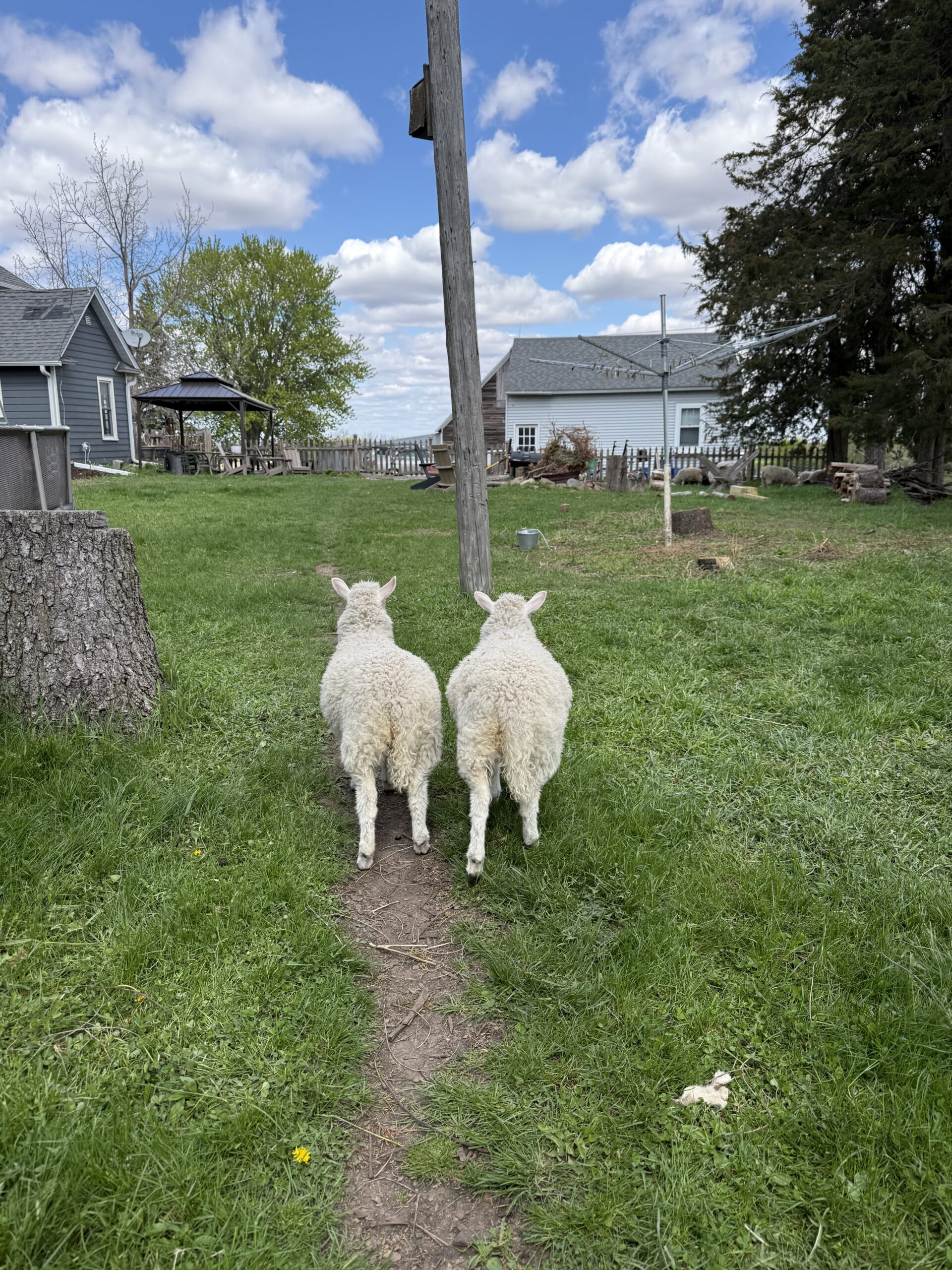
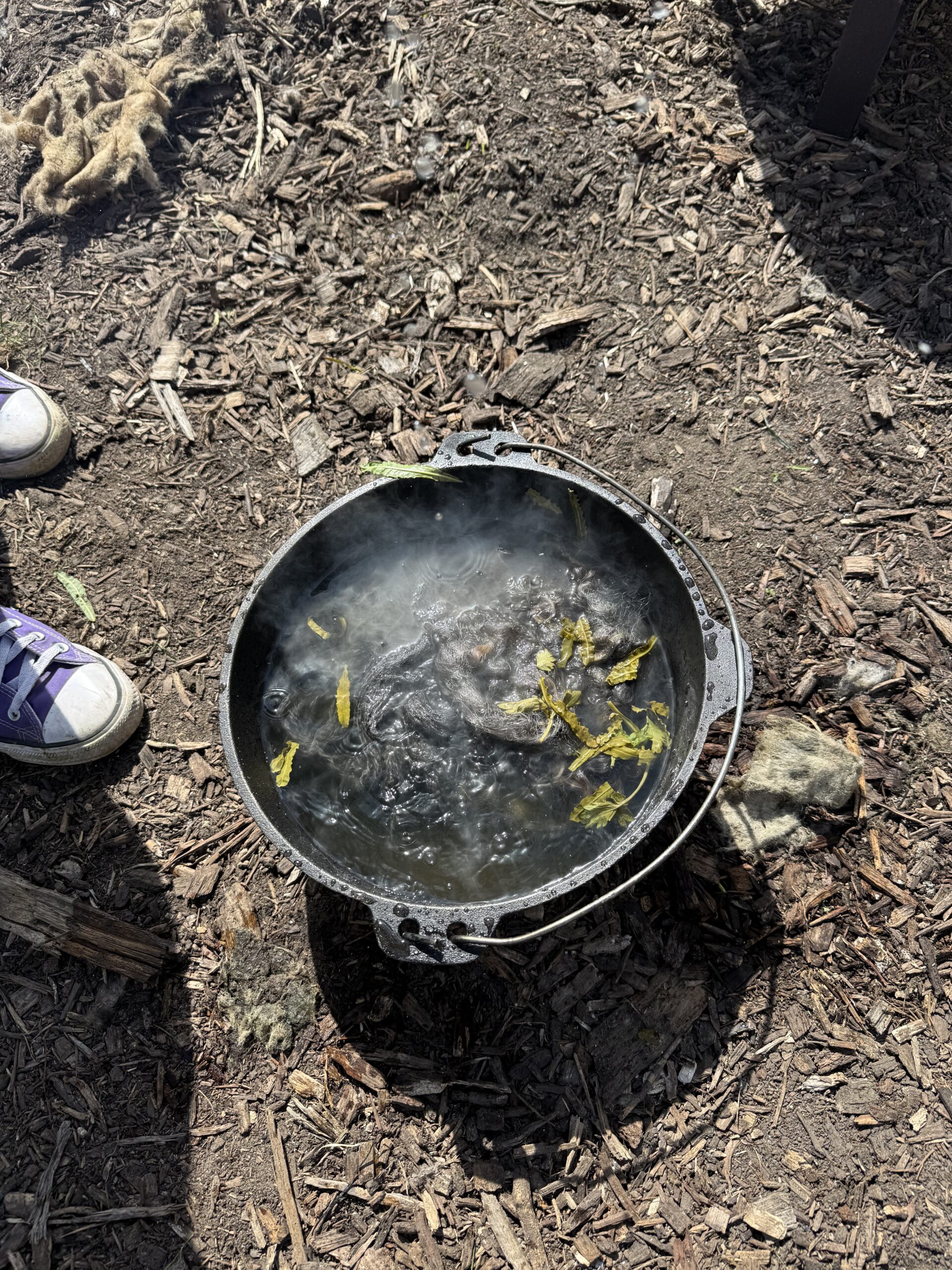
On the second day of the lab, we went to Get Bentz Farm (excellent name) and dyed our wool over a wood fire. We did this alongside group one, and we utilized weld (full stalks with leaves and florets included) with the hope of dyeing our wool yellow. We let our wool bake in the sun for a bit before adding it to a cast-iron pot of water boiling over an open flame, since rapid temperature fluctuations can prevent it from absorbing the dye properly. In addition to the wool that we had mordanted the previous day, we added both un-mordanted white and un-mordanted gray yarn wrapped on respective wooden spoon handles for the sake of comparison. Unfortunately, since the spoons were too long to fully fit in our pot, some of the un-mordanted wool was not able to be submerged. We did make an effort to ensure that the loose, mordanted wool was as unrolled as possible in the pot, so that as much surface area could absorb the dye as possible. We then hung the pot containing water and our wool over a fire from 2:17 pm to 3:25 pm, taking it off and putting it back on every now and then to attempt to keep the temperature at 160-180 degrees (the optimal temperature range for our weld). I took incremental temperature readings, organized in the following table, that reflect our attempts to keep it as optimal as possible. The data is not constant, as this was a very relaxed process that left lots of time to be spent with the resident flock of sheep. We also added some fresh weld at 2:43 pm to observe its effects compared to the processed weld we had initially added.
| Dyeing: Time vs. Temperature | |
| Time Since Pot Put Over Fire (Minutes) | Temperature (Fahrenheit) |
| 3 | 90 |
| 6 | 110 |
| 9 | 140 |
| 12 | 160 |
| 28 | 155 |
| 44 | 150 |
| 48 | 180 |
| 58 | 170 |
| 65 | 160 |
| 68 | 160 |
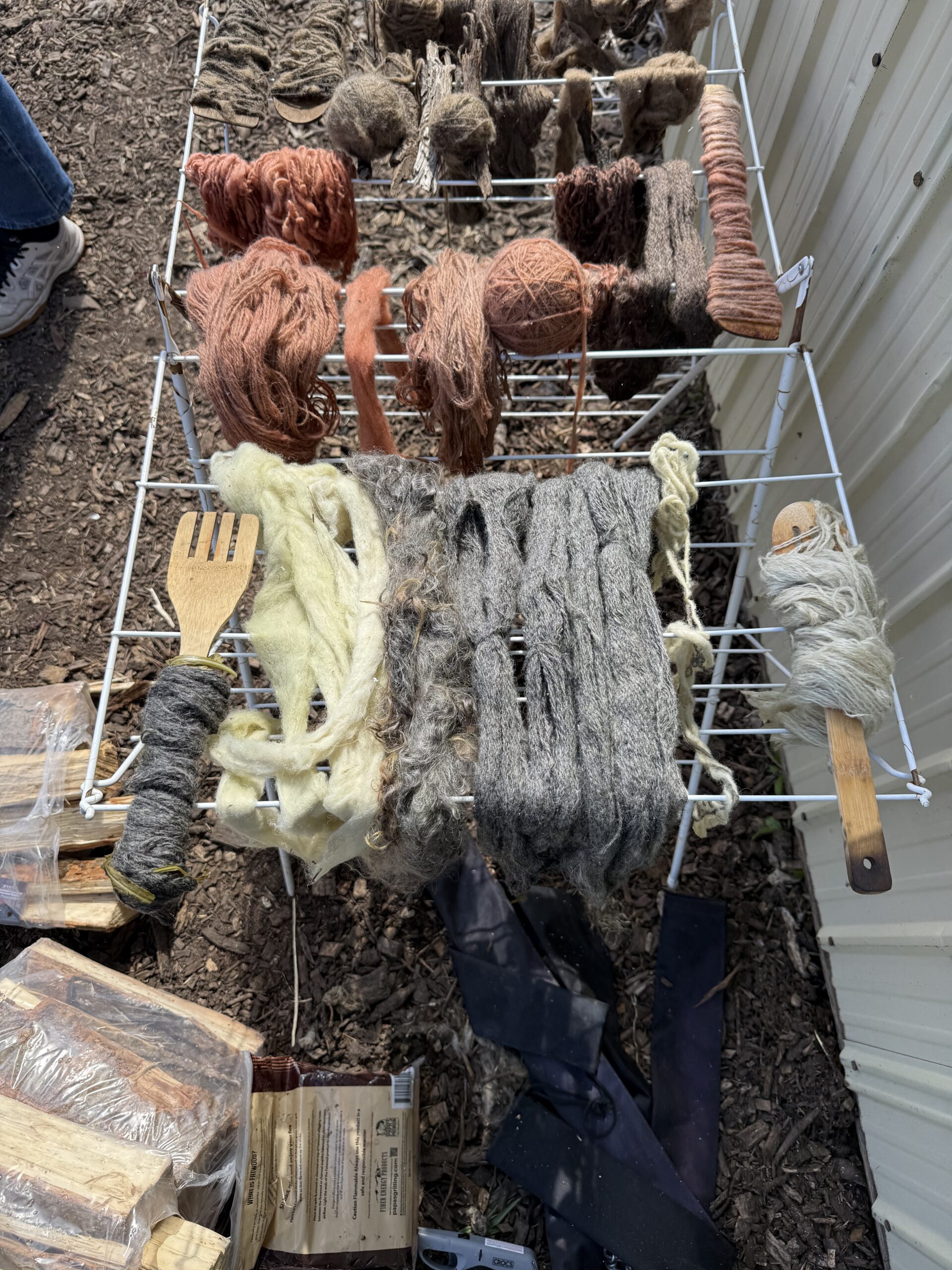
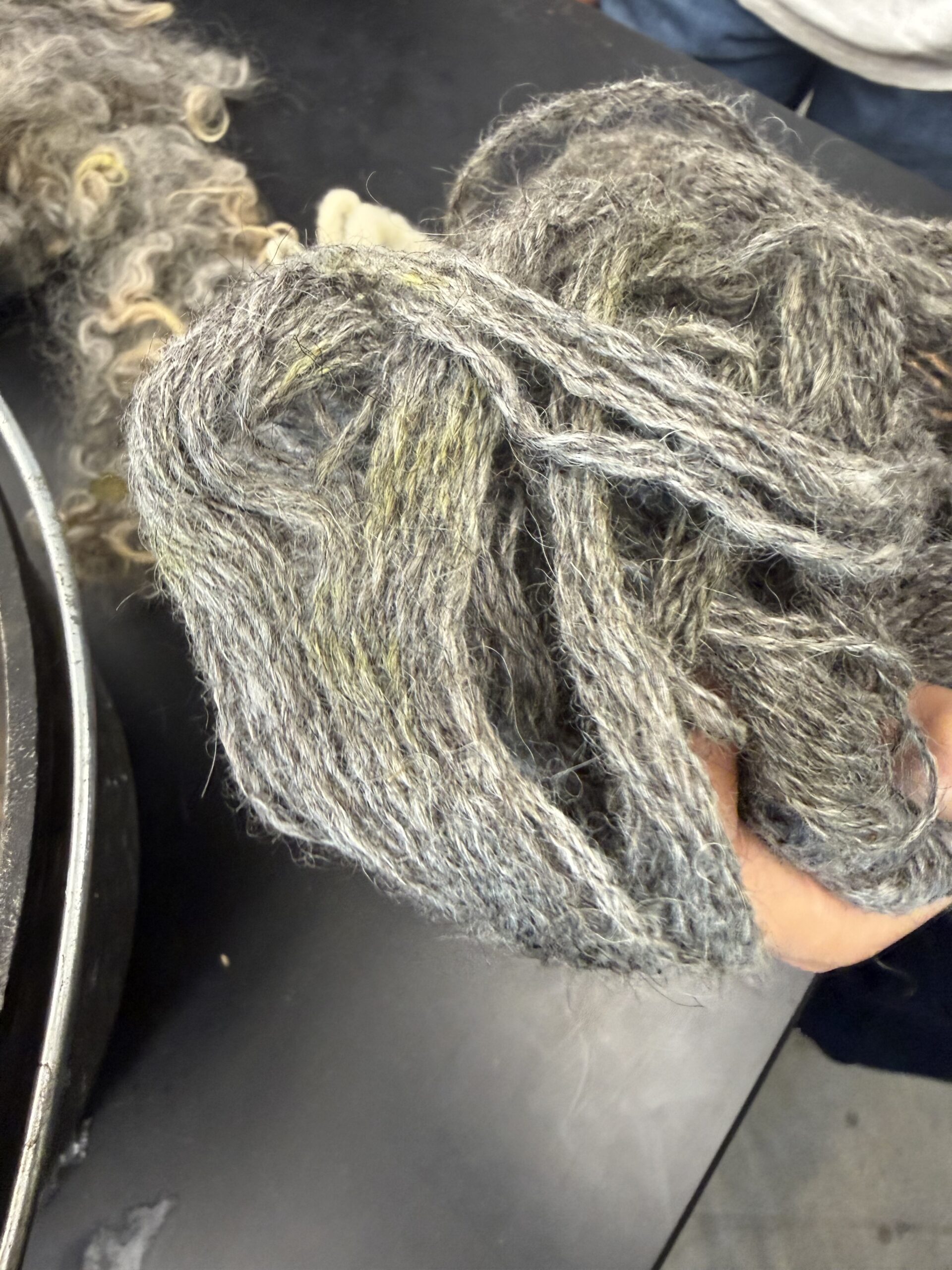
On the third and final day of the lab, we analyzed the results of the dyeing. We first washed our wool thoroughly, and then hung it up to dry so we could get a good look at the final product. The un-mordanted grey yarn did not visibly take on any yellow, with the white yarn perhaps exhibiting a barely discernible hue. Our mordanted gray yarn definitely absorbed some yellow, although the darkness of the original color made it somewhat hard to see. The curly, un-carded, mordanted wool exhibited the same results in the majority gray areas, but the previously light tan curls were “frosted” with yellowing. The effect of the weld was most obvious in the white mordanted wool contributed by group one, which ended up looking like dirty snow (perhaps slightly urinated on). The wool certainly smelled the part, possessing a pungent, earthy odor akin to that of fetid, dead plant matter (unsurprisingly). Interestingly enough, the most obvious patches of yellow resulted in areas of the wool (even gray yarn) that were directly in contact with the fresh weld.
Below: Various Photos of the Process (the first is most integral)

0 thoughts on “Week 5 Lab Group 2: Dyeing”