
Introduction
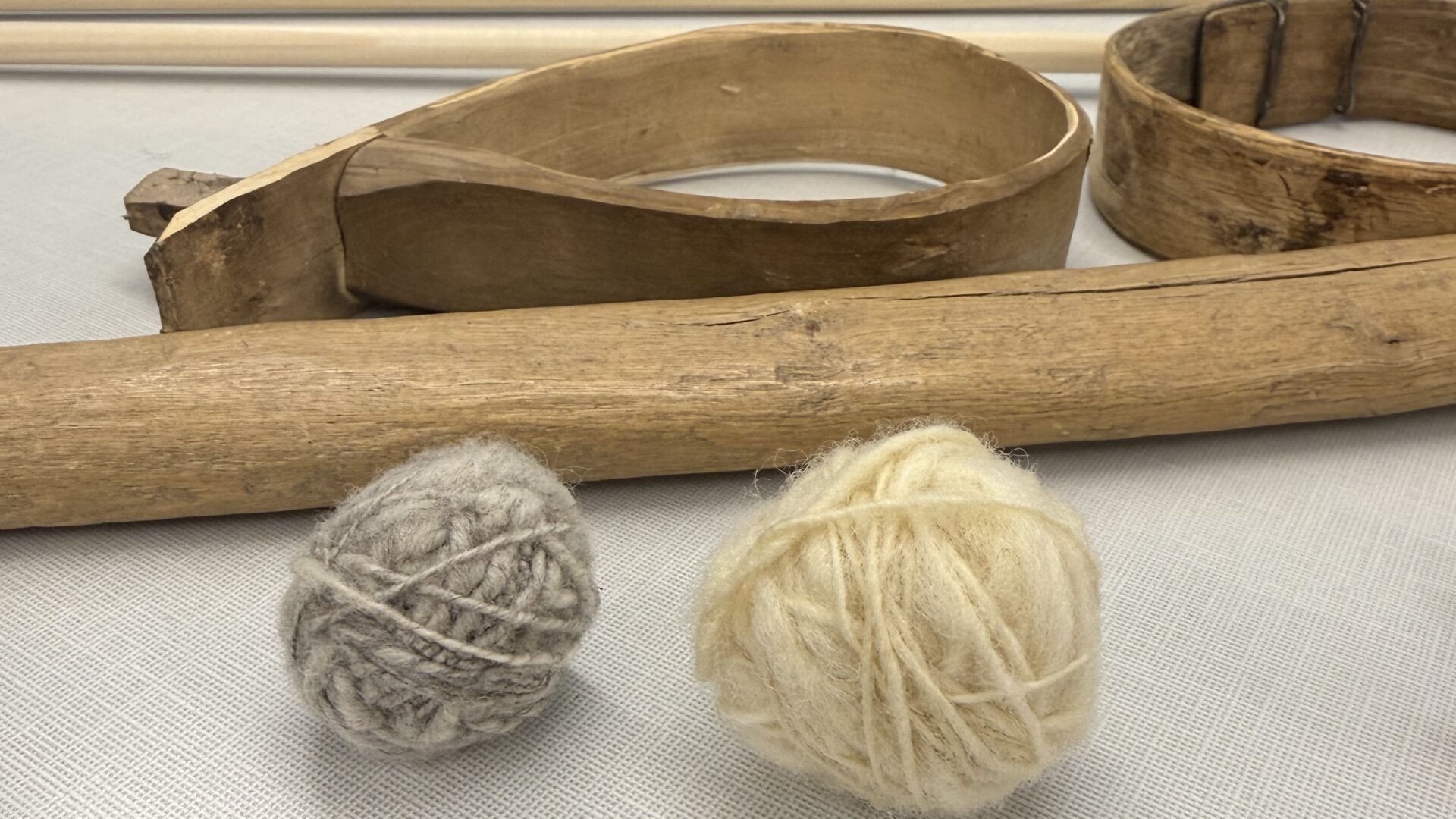
During the Week 2 Lab, we were introduced to the ancient practice of textile making and participated in the first steps in textile manufacturing. We prepared for the lab by spending the classes leading up to it doing readings about textiles in the ancient Mediterranean, watching a film about how learning about wool working can make scholars better readers of Ancient Greek and Latin, and discussing what we can measure and learn about from engaging in wool working ourselves. On our lab day, local experts, Theresa and Lori, from Bentz Farm, visited our class to teach how to card, spin, and weave. We were split into six lab groups with four people in each. At each station, we tried our best to learn and master the skills taught to us by the two wool experts. Each group spent 30 minutes carding, over an hour spinning, and about an hour weaving. This lab write-up will introduce what carding, spinning, and weaving is, and discuss each group’s thoughts, feelings, and experiences learning these skills at each station.
Carding
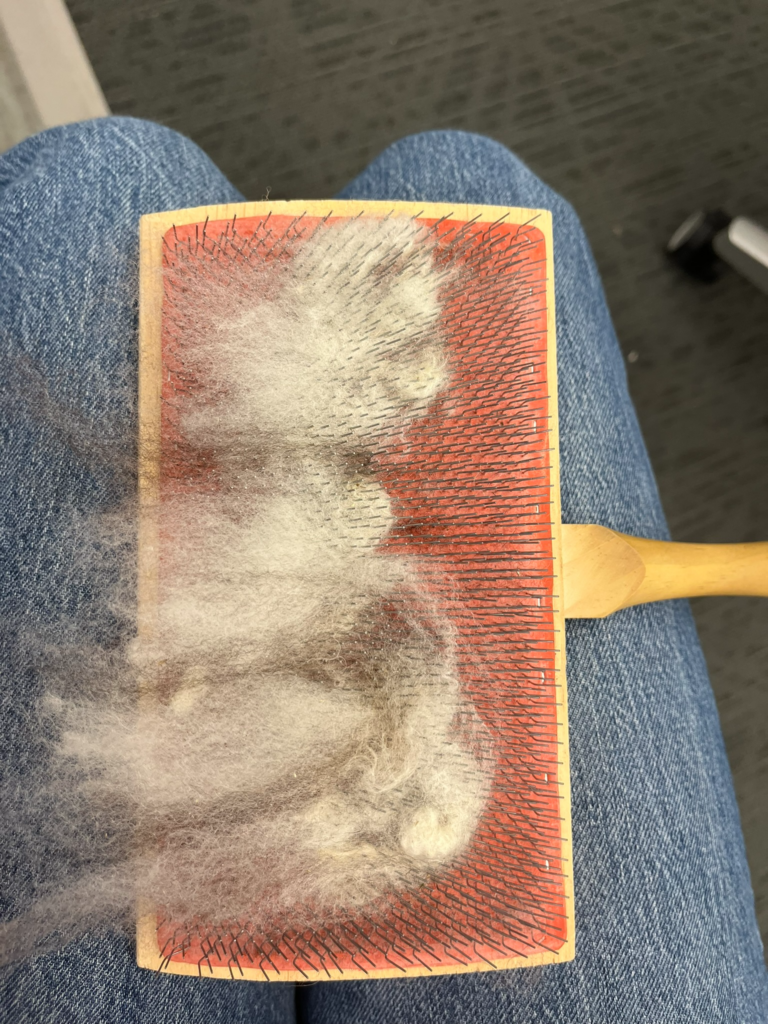
The first process in making textiles is carding. The process of carding involves airing out the wool, making it easier to spin. There are two methods, combing and wire brushing, that produce different wool qualities because carding affects the wool’s structure. One method was using murder combs to make nests. A nest is created with much more air. Having a lot of air in the wool when spun makes it less durable, so, for example, socks could not be made from this wool. Using the other method with wire brushes, sausage rolls are created, and stronger pieces of yarn are produced, which makes them more resilient to wear and tear. For combing, one would rake the wool strands to air them out and make them longer. For the wire brushing, one would brush the wool onto one brush, then transfer it to the other. Some people were talking about how it was a difficult task because the brushes were stiff and difficult to separate. For some, this station was tiring and strenuous. For the lab, each group was split in half, so two did wire brushing, and two did combing.
Group 1 data:
This group collected qualitative data. They measured how much wool they carded: 3 grams. To card that much wool, it took 3 minutes and 10 seconds to make a sausage roll of wool.
Group 2 data:
This group thought it was most important to record the number of passes and transfers that they did. They had significant variability in the numbers they gathered. They typically had 4-7 passes per transfer and then transferred the wool 4-10 times, which was more than recommended. They felt that the combing process was much easier than brushing. They also did not think that the data they collected was a precise measurement.
Group 3 data:
This was the last station for this group, and they did not have enough time to collect any quantitative data. They commented on their experience at the carding station. They felt it required considerable strength to properly card the wool, and they found it easier to use the wire brush than the comb.
Group 4 data:
This group’s quantitative report recorded that it took them 5 minutes to create a sausage roll during the carding process. During the combing part, it took 10 minutes to make one nest. They did not record the total number of sausage rolls and nests produced. From qualitative observations, they mentioned that the combing was very difficult and they felt a great deal of force was required to get the wool to “cooperate”. It also caused fatigue and arm strain. They considered combing more difficult than carding because force was required, and the strands tangled more easily.
Group 5 data:
This group recorded the total number of nests and sausages created by each individual during the 30 minutes allocated for this session. The group produced 5 nests, 7 sausages for a total of 12 items.
The qualitative descriptions included that members of this group really enjoyed the activity, and they felt it was a “powerful” activity. Others in the group found the wire brushing to be very hard. The majority preferred the combing over the wire brushing, but combing created more wasted wool.
Group 6 data:
This group only recorded quantitative data. They produced 1 nest per person and 2 sausage rolls per person in the allotted time.

Spinning
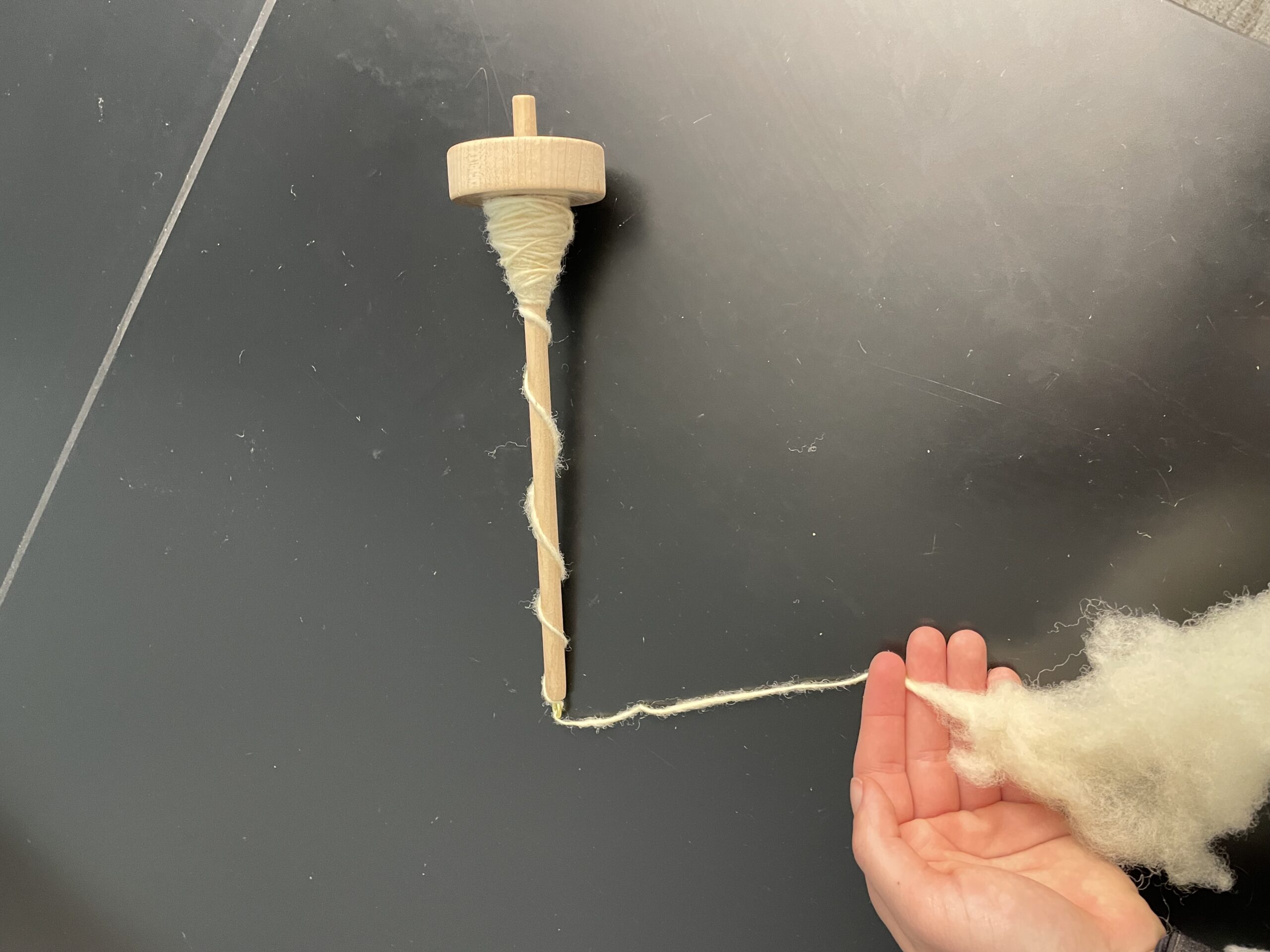
For the spinning portion, we employed a weighted drop spindle. Using a leading thread, we wrapped it around the base and up the spindle in a spiral fashion before looping it around a hook at the top two or three times. This left some of the leading threads at the top to be fed into the wool. We all started with the same pre-carded wool, and after a short demonstration, we started to try to spin. The process started by creating tension by spinning the spindle clockwise or counterclockwise and drafting some wool onto the leader thread (the wool’s natural tendency was to stick to itself). This tension dispersed through the wool, causing it to twist into a thread. It was important to keep track of the “triangle” where the wool would start to feel the tension, as this determined the width of the thread. Upon creating some length of thread, we would stop the spindle (usually using our legs), and either draft more wool or wrap some of the thread around the base, wrap it back up along the spindle, loop around the top, and then continue the process. Below is a summary of data for how much thread was spun in feet over a specified period of time, in minutes
| Length of wool spun (ft) | Time period elapsed (min) | Ratio (ft/min) |
| 57.5 | 210 | 0.27 |
| 86.0 | 210 | 0.41 |
| 72.5 | 210 | 0.35 |
| 247.5 | 375 | 0.66 |
| 57.9 | 210 | 0.28 |
| 76.8 | 210 | 0.37 |
| 2.75 | 1 | 2.75 |
| .9 | 1 | .9 |
| 3.0 | 3.97 | 0.76 |
| 2.0 | 4.47 | .43 |
| 3.75 | 3.6 | 1.04 |
The average for our class was 0.75 ft/min, with a standard deviation of .71 ft/min. It’s worth noting that comparing the amount spun over long periods of time isn’t equivalent to the amount spun in short bursts, which is why we have such a large standard deviation. The amount spun over long periods possibly includes instances where wool was not being spun as the person was carding or weaving, and the longer period takes into account physical and mental exhaustion, as well as the possibility that the person improved over the period. Regardless, this still provides an idea of what beginning spinners could be capable of, and how much there is to improve. This also doesn’t take into account the quality and thickness of the thread.
At the start of spinning, one immediate difficulty was not breaking the thread we were making. Creating too much tension or not drafting correctly could cause the thread to snap. While this was not a fatal error as the broken thread could be fed back into the thread on the spindle, this took time and could cause variations in the thread’s width. As we spun more, different difficulties presented themselves. Spinning for long periods of time caused strain or a “rope burn feeling” on the hands, specifically the fingers, it was also difficult to recover if we didn’t keep track of our triangle and our thread got too thick. This would generally necessitate breaking the thread, undoing the twist, and then drafting the thinner strand. A common question was if it was worth trying to fix an already abnormally thick part of the thread or simply fix it later and keep the thick part.
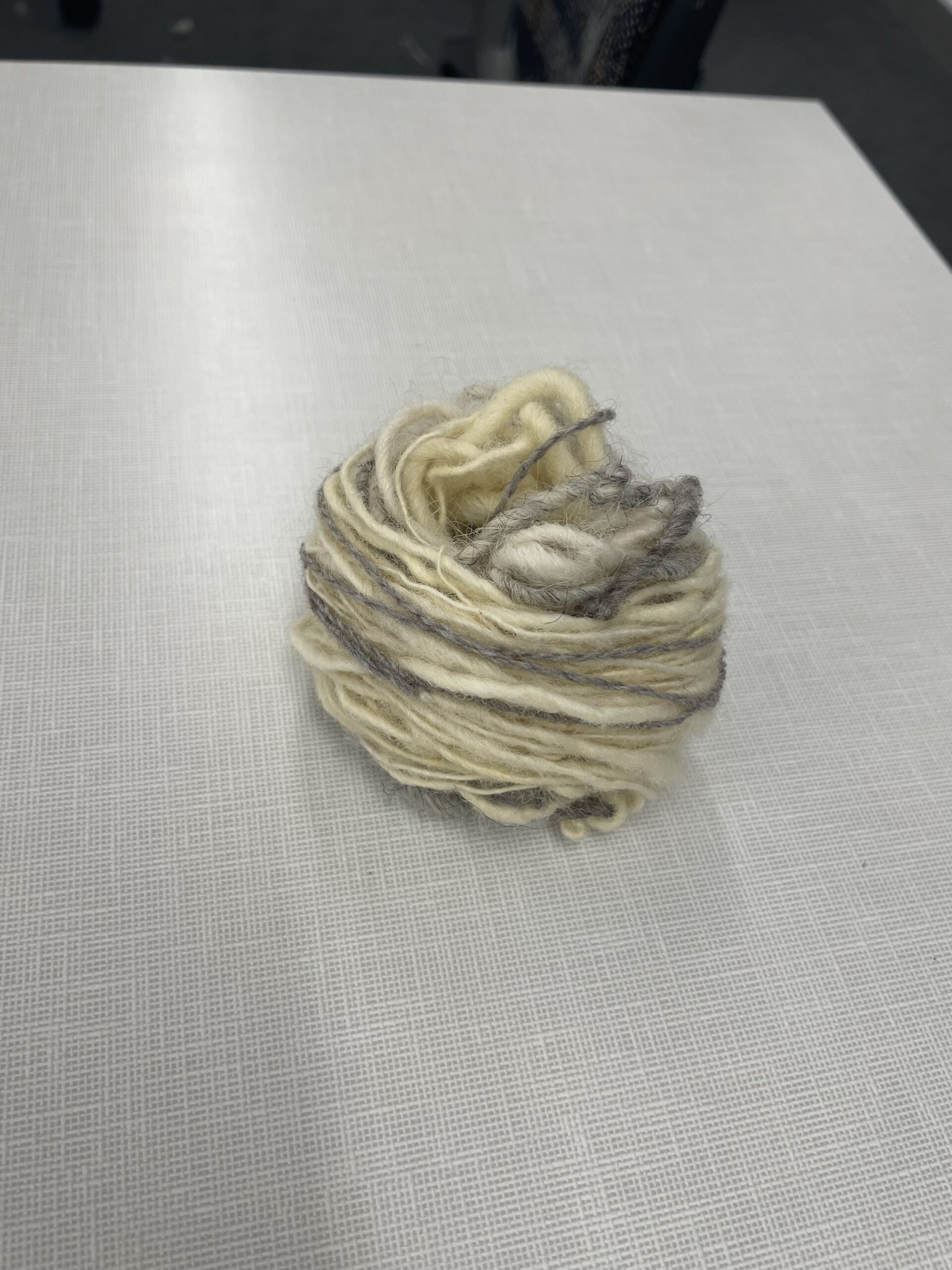
Groups also had the opportunity to try spinning different wool beyond the starting wool, including wool they themselves had carded. Groups observed how different types of wool naturally lent themselves to different thicknesses and how some were easier to spin than others. Fluffier wool was observed to break more easily but produced a thinner thread, while stiffer wool was easier and more stable to spin
Groups encountered different emotions as time went on. For some groups, spinning made time go by very quickly. For others, boredom and frustration also became (or continued to be) issues. Groups were generally able to converse while spinning; however, there were times when focus was required if the thread was at risk of breaking or was becoming thick. From an experiential perspective, this could provide insight into the importance of being skilled enough to be able to easily accomplish other tasks while spinning in order to stave off boredom and also to accomplish other tasks, as weaving is very time-consuming. A theme throughout groups was that this experience created empathy for the work of women in the ancient world. Despite only spinning for around four hours, many of us were ready to never touch a spindle again, although there were also people who found it relaxing and continued spinning over the weekend.


Weaving
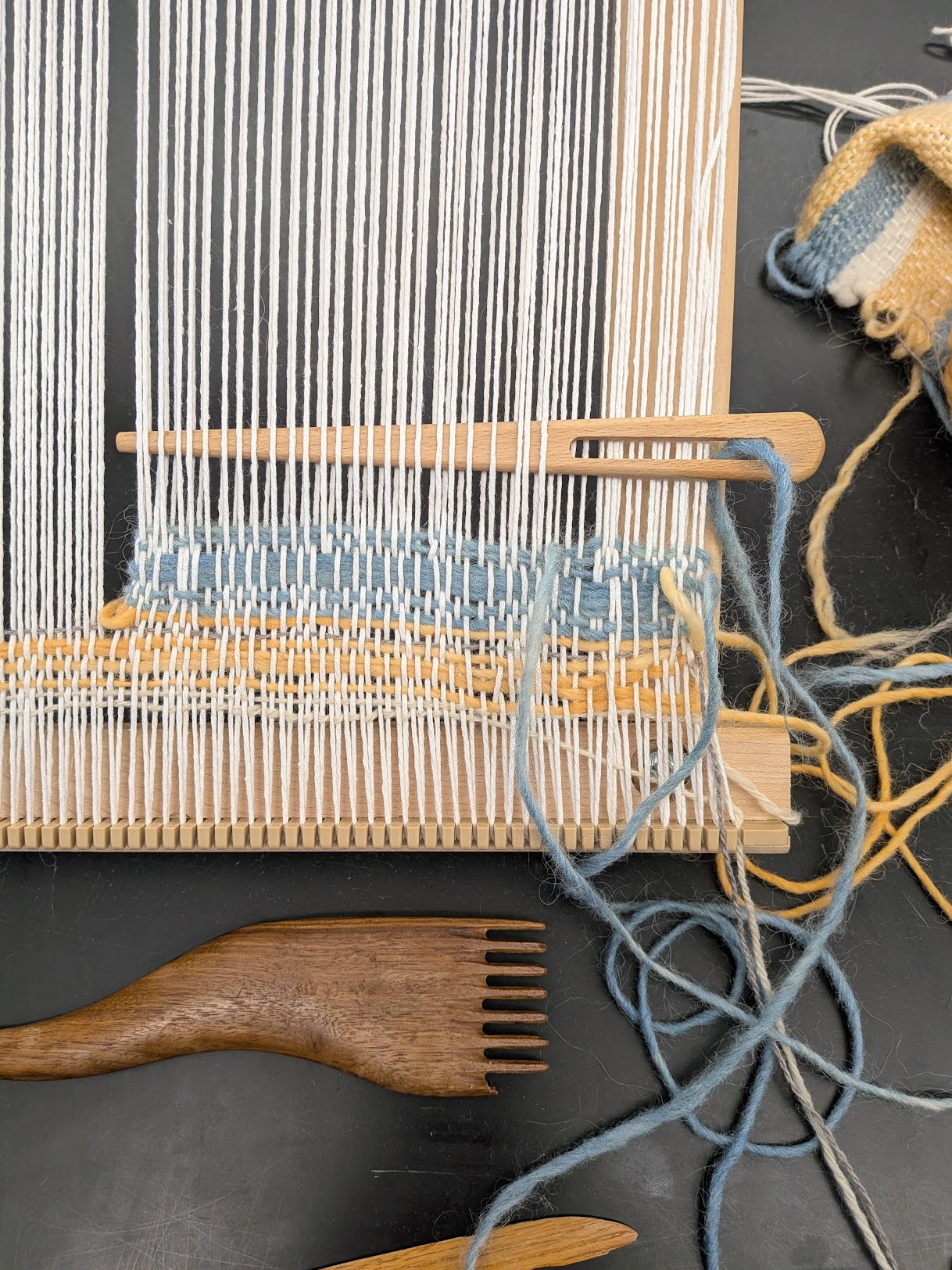
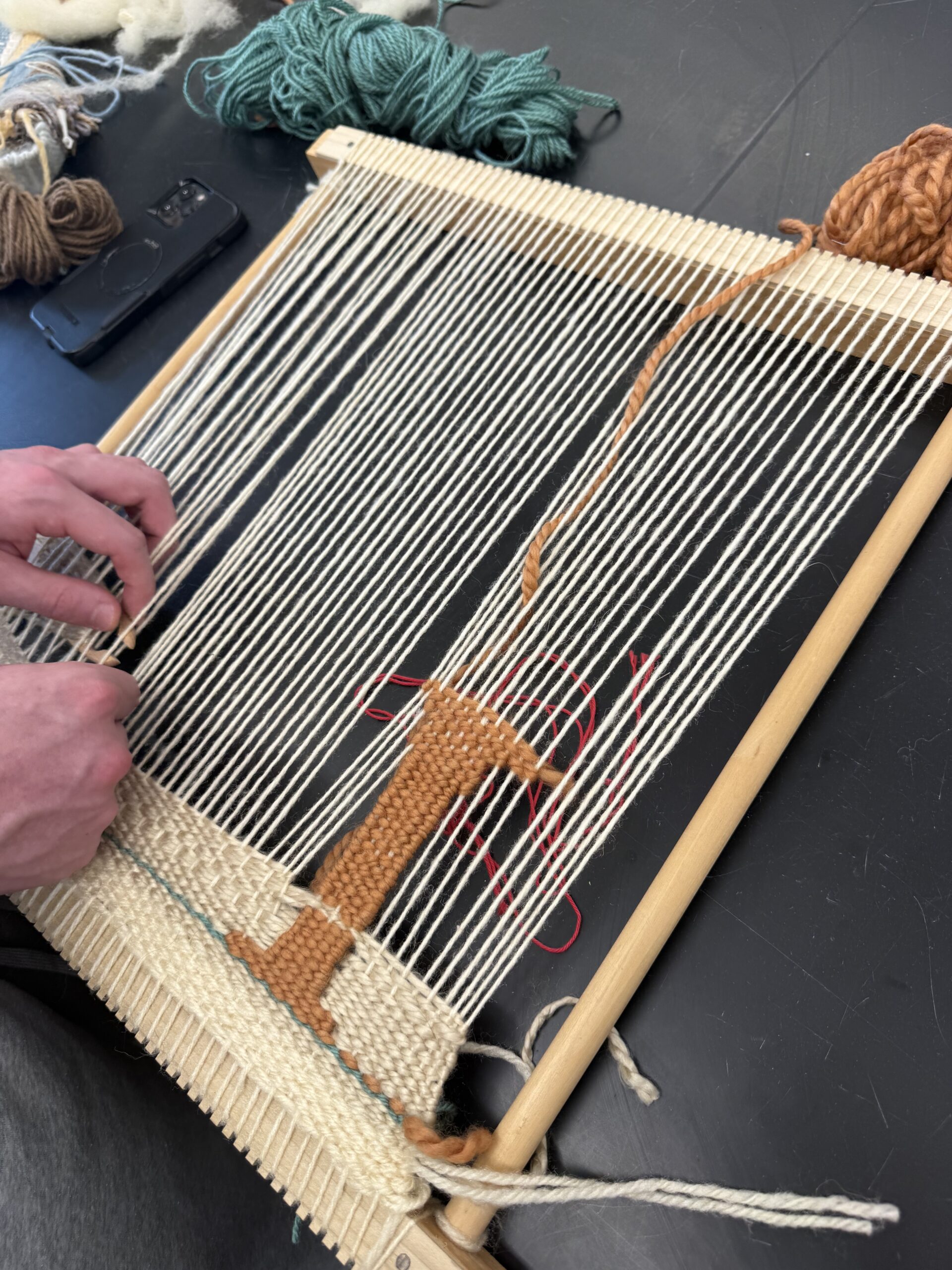
At the weaving station, there were three different looms for us to experiment with: a tapestry loom with thin string, a tapestry loom with thick string, and a rigid heddle tabletop loom. All the looms were made out of wood, were pre-strung with white thread, and started off for us. Our goal was to get a feeling for creating rows, how difficult it was, how long it took, what weaving different kinds of wool feels like, and how the types of looms compare to each other. Each group had various thoughts, feelings, and skill levels with each specific loom.
Tapestry looms:
The thing that distinguished these two looms was the thickness of the string. The goal for the thin-strung loom was to make rows back and forth over and under the white strings. The goal for the thick-strung loom was the same, with an added creative element of a tree pattern. Most groups did not discuss the difference between the two tapestry looms, except for group 4, who found the tapestry loom with the thin yarn “very difficult to use”.

Emotional Data
Group 1 data:
Least enjoyable station, tedious, constant attention to detail, frustrating
Group 2 data:
Intricate, time-consuming, straightforward, easier to understand at first than spinning/carding, painful, difficult to achieve consistent tight yarn across the loom
Group 3 data:
Requires lots of attention, missed using a heddle, tedious
Group 4 data:
Cool design potential, difficult, unlikeable
Group 5 data:
Creativity, freedom, eye strain, individualism, relaxed, quiet
Group 6 data:
Time-consuming, need for precision, need for patience, gained respect for ancient women
Qualitative Data
At the weaving station, most groups were interested in the experience of weaving and the feelings, frustrations, and focus that come with it. This resulted in half of the lab groups recording the time it took to weave in some capacity.
Group 2 timed how long it took to do about 10 stitches, each about half a centimeter in length. They concluded that it could be done in 30 seconds.
Group 3 timed how long it took to make one pass through. Their times ranged from 6:38 to 6:46 minutes for one pass.
Group 6 timed how much two people could weave in 10 minutes. They completed about two rows.
Rigid heddle table top loom:
This loom was being used to weave a cloth towel. The loom was very popular with Group 4. They found it the easiest loom to learn how to use and then actually use. They really liked this loom, especially in comparison to the tapestry looms. They apparently made a ton of progress in the short amount of time they were at the weaving station. This was evident when the last groups arrived at the weaving station and didn’t get the chance to try the tabletop loom because the previous groups had completed all we were being taught to do. Group 6 also enjoyed this loom and agreed with Group 4 that this was the easiest of the looms to learn how to use. They also mentioned this was by far the quickest loom to weave on. Group 3 compared the quickness of this loom to the tapestry loom by saying that the pass with a heddle took about 2 seconds (compared to the almost 7 minutes of hand/needle weaving on the tapestry looms). Group 5 was interested in the strings on the table top loom, which were cotton strings that felt softer and less sticky than wool.

Conclusion
The major takeaways for this unit were that we all have a greater appreciation for the amount of work that goes into creating textiles. These processes, which we took for granted, require a tremendous amount of time, energy, and expertise to be efficient. The amount of wool that would be required to make clothing is staggering, and the thought of spinning and or weaving for ten hours a day would be exhausting. Throughout the lab, people made many mistakes. However, historically, the wool with errors couldn’t be just thrown away because it was very valuable, and mistakes would have a detrimental effect by limiting the amount of textiles produced and costing money.

0 thoughts on “Week 2 Lab Summary”