
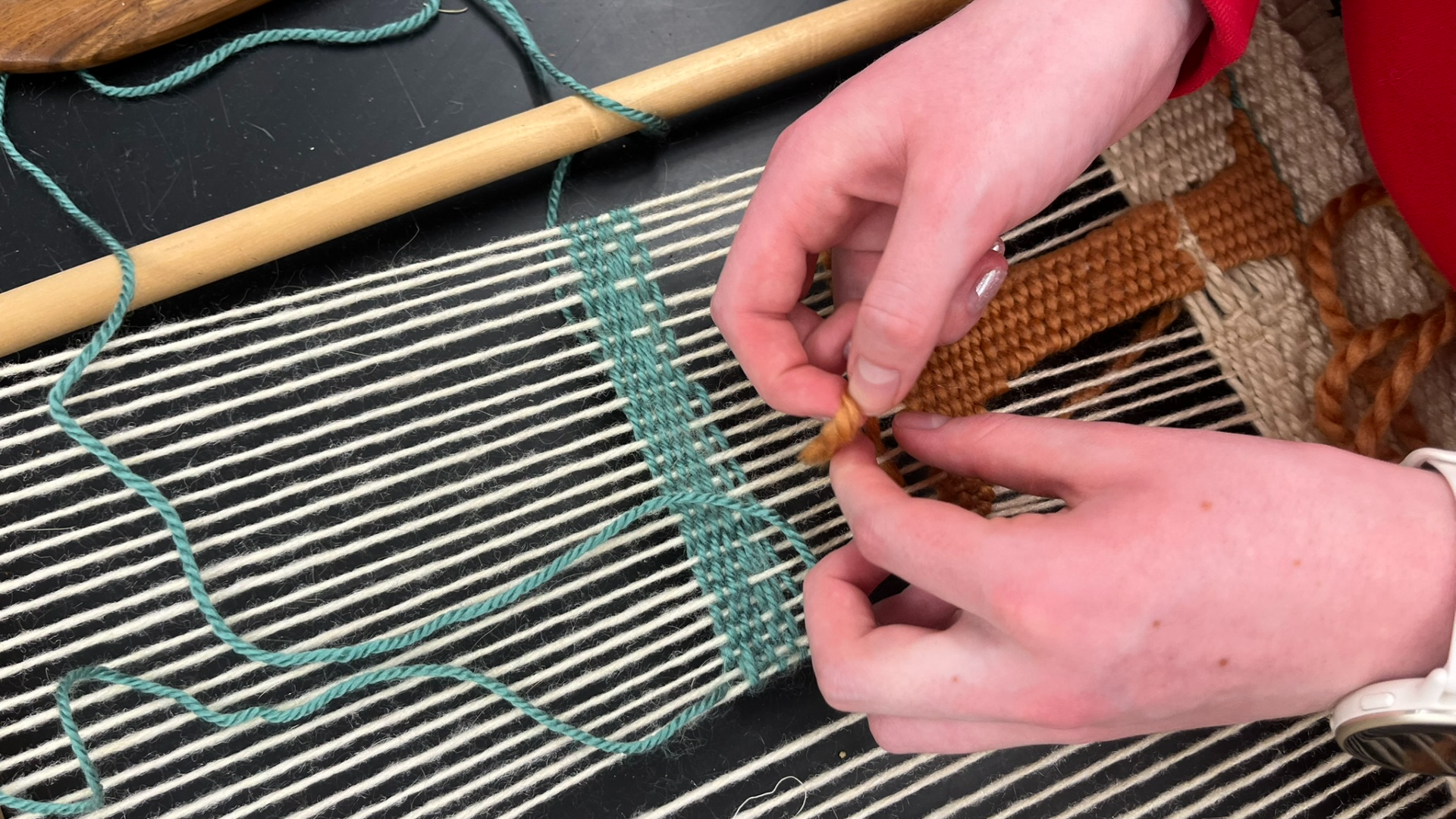
Our wool lab consisted of spinning, carding, and weaving, which were all methods of processing wool done primarily by women before the invention of modern textile manufacturing. Throughout the three stations, a central challenge we faced was deciding how to best represent the processes through quantitative data. Since there was a significant learning curve across the three stations and not enough time to gain real skills, it was difficult to collect consistent data.
Spinning
The first process we tested was spinning, which includes tying a leading string onto a drop spindle, creating a loop at the top, and folding a thin strip of wool through the loop. As beginners, it was easiest for us to create tension on the string, stop the spindle, and spread the energy out on a thin strip of wool. Team members found that starting the yarn was the most difficult part, but after about 20 minutes, we had mostly begun to understand the basic steps of spinning wool. Overall, we experienced difficulties in maintaining the delicacy required to add wool to the spindle. The wool was resistant to thinning out and would often spin into thick clumps. If the wool was able to thin, it was very easy to snap the yarn due to too much pent-up tension.
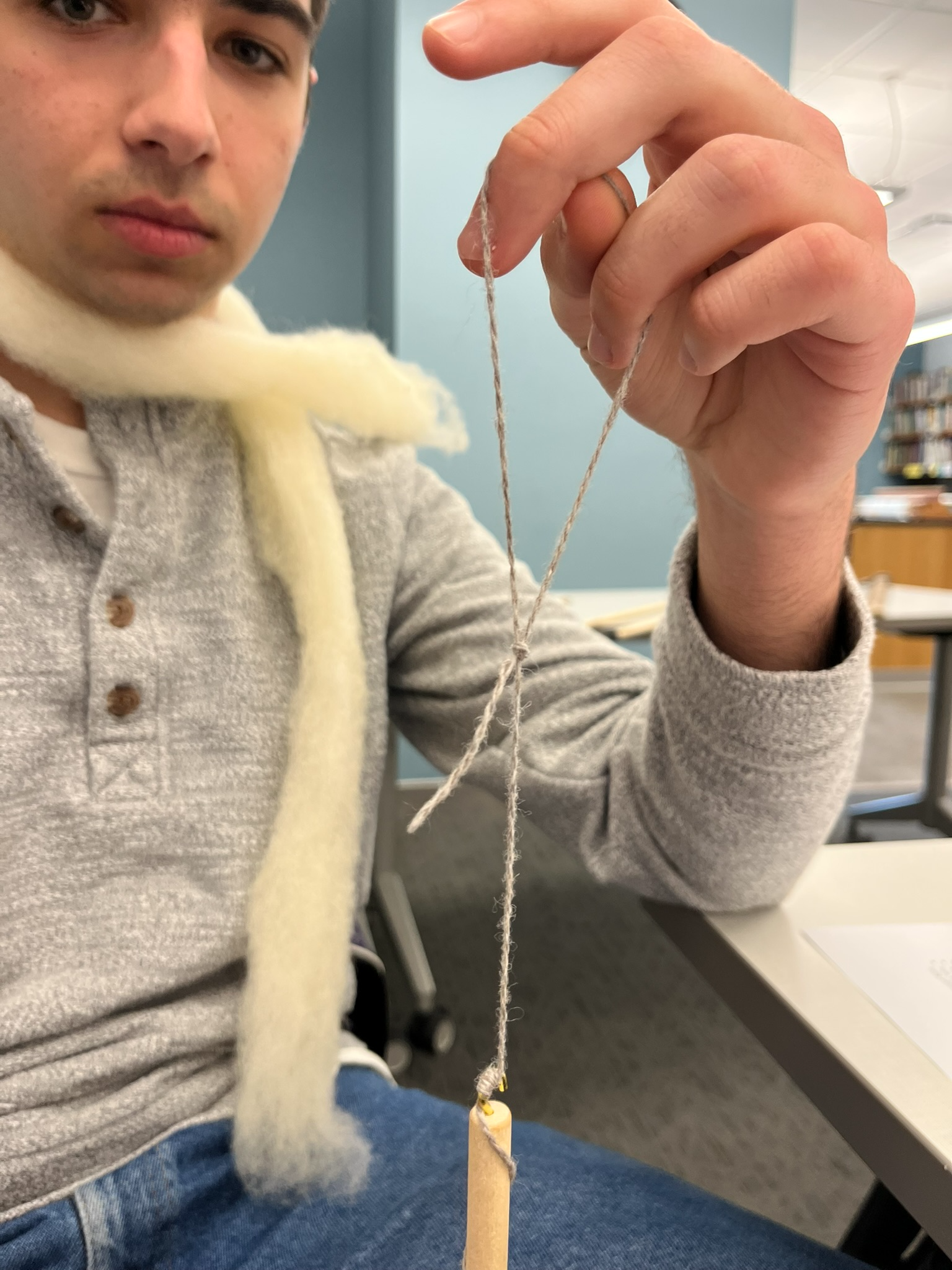
By the second part of the lab, we had generally developed a spinning method. In general, it took about four minutes to spin three feet of the original wool we were given. The self-carded wool was easier to spin at first, but had more clumps, meaning it took longer to spin. The wool we carded was either under-processed, making it too clumpy, or overprocessed, causing breakage while spinning, which meant it took longer to spin, about 4.5 minutes for every 2 feet of yarn. The “bougie” wool we received near the end of the lab was the easiest to spin because it was very airy and free of clumps. The amount of time in the visualization below reflects the length of time between wrapping the yarn around the spindle.
| Yarn type | Time | Length | Ratio |
| Original yarn | 3:56 minutes | 3 feet | 0.76 ft/min |
| Self-carded yarn | 4:28 minutes | 2 feet | 0.43 ft/min |
| Third smooth yarn | 3.36 minutes | 3.75 feet | 1.04 |
Carding
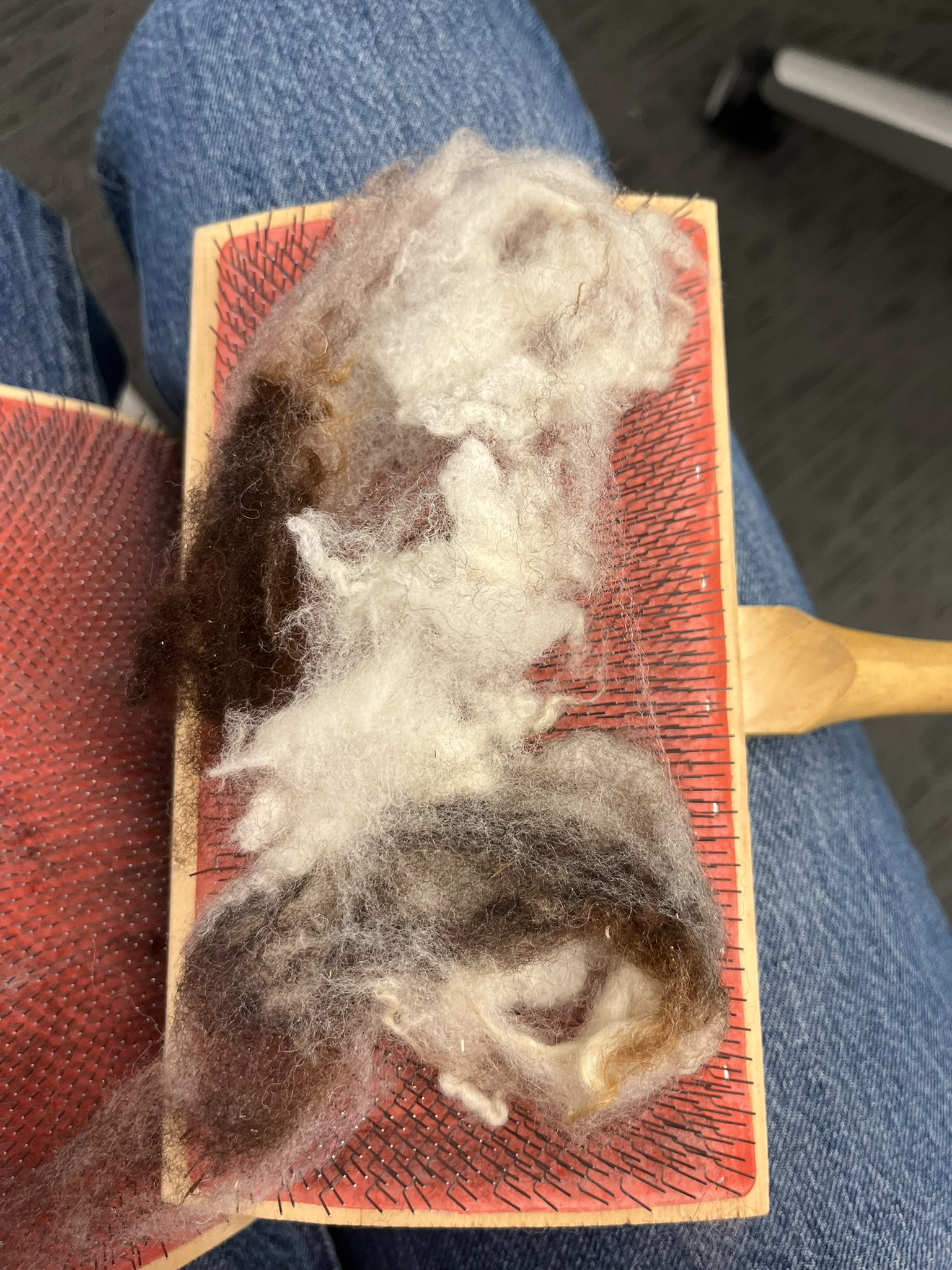
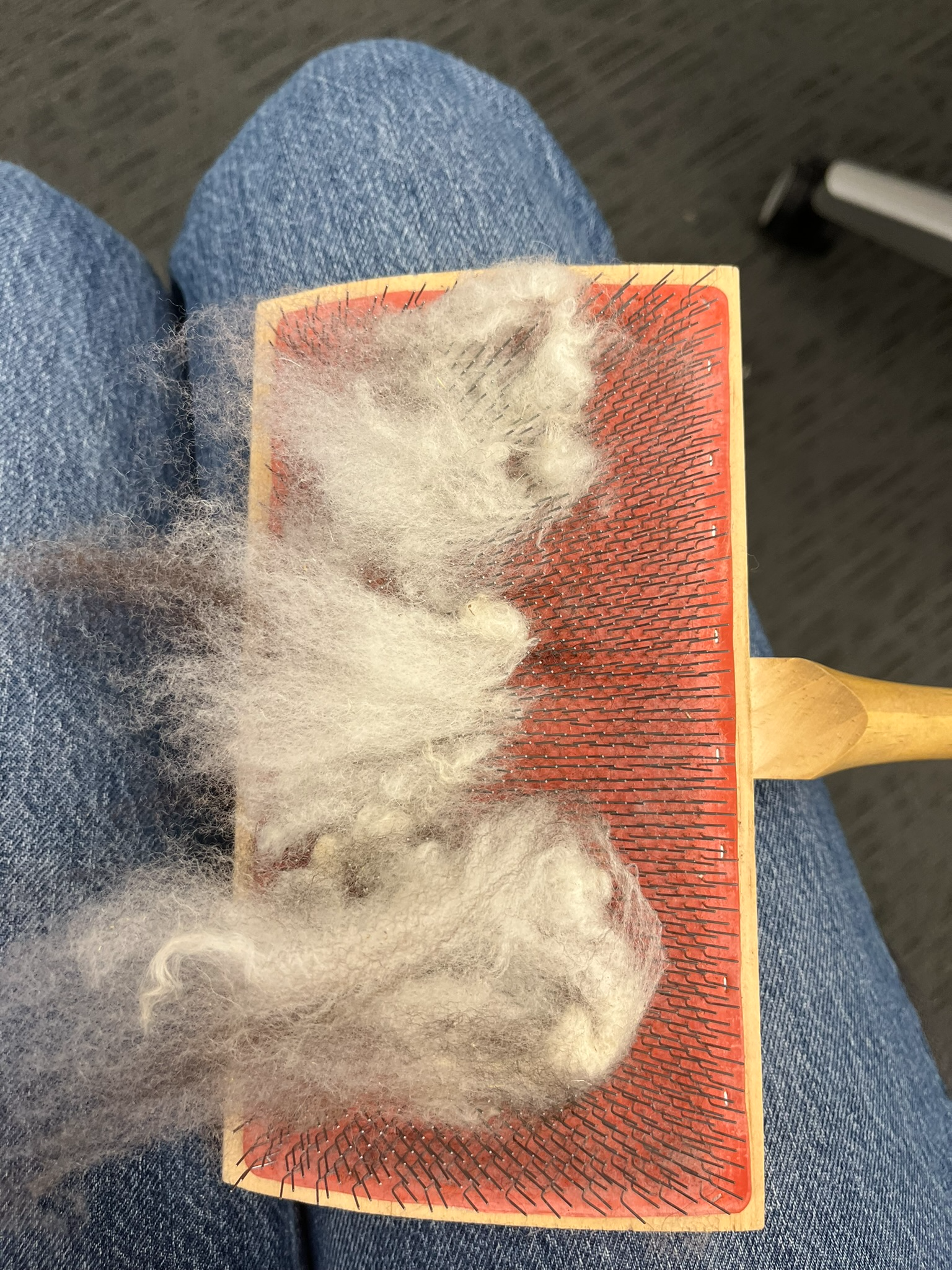
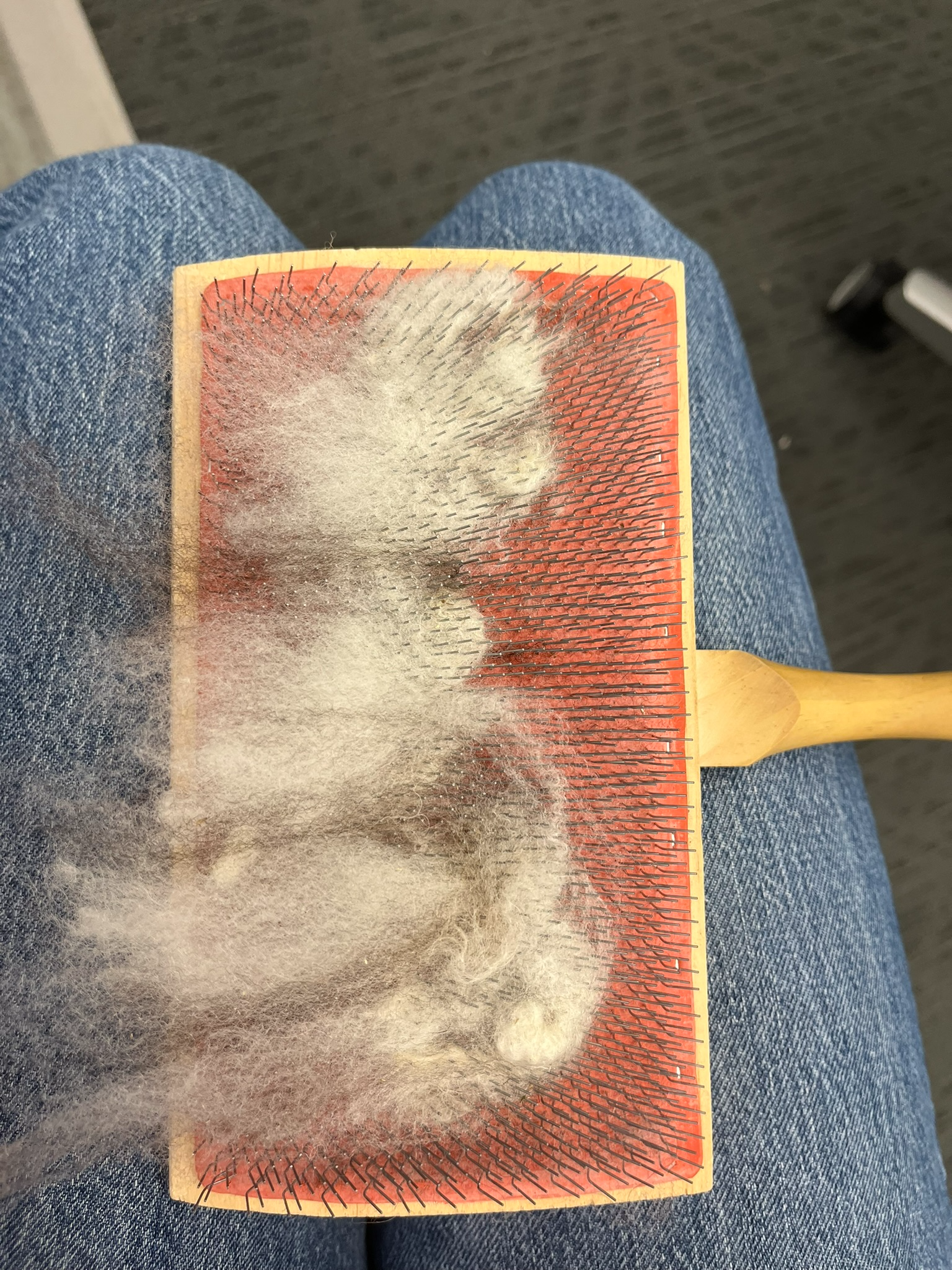
Carding was the most labor-intensive station. The process included separating a small piece of wool with two large wire brushes. A key part of the carding process is transferring the wool between brushes to ensure smoothness, which requires facing the brushes in the same direction, and the removal process, which includes a set of complicated steps to turn the wool into an even log. The brushes were very stiff and difficult to pull apart, and it was easy to get the brushes too intertwined, rather than using the tips of the bristles. The number of passes and transfers per section of wool varied wildly. Team members typically raked 4 to 7 passes on the wool per transfer, and instructors recommended about 3 transfers per side. As beginners, we experienced outliers, often raking until we had transferred 7 to 10 times. At the carding station was also the process of combing, which suits long fibers the best and creates a ropy, rough final product. Combing was much smoother than carding because of the brushes’ pointy bristles and the lack of resistance. Counting the number of passes and transfers was very difficult. In the future, it would be helpful to be more precise so that the data was less varied.
| Recommended | Actual | |
| # of passes | 4-6 | Varied, typically 4 |
| # of transfers | 3 | Varied, 4-10 times |
Weaving
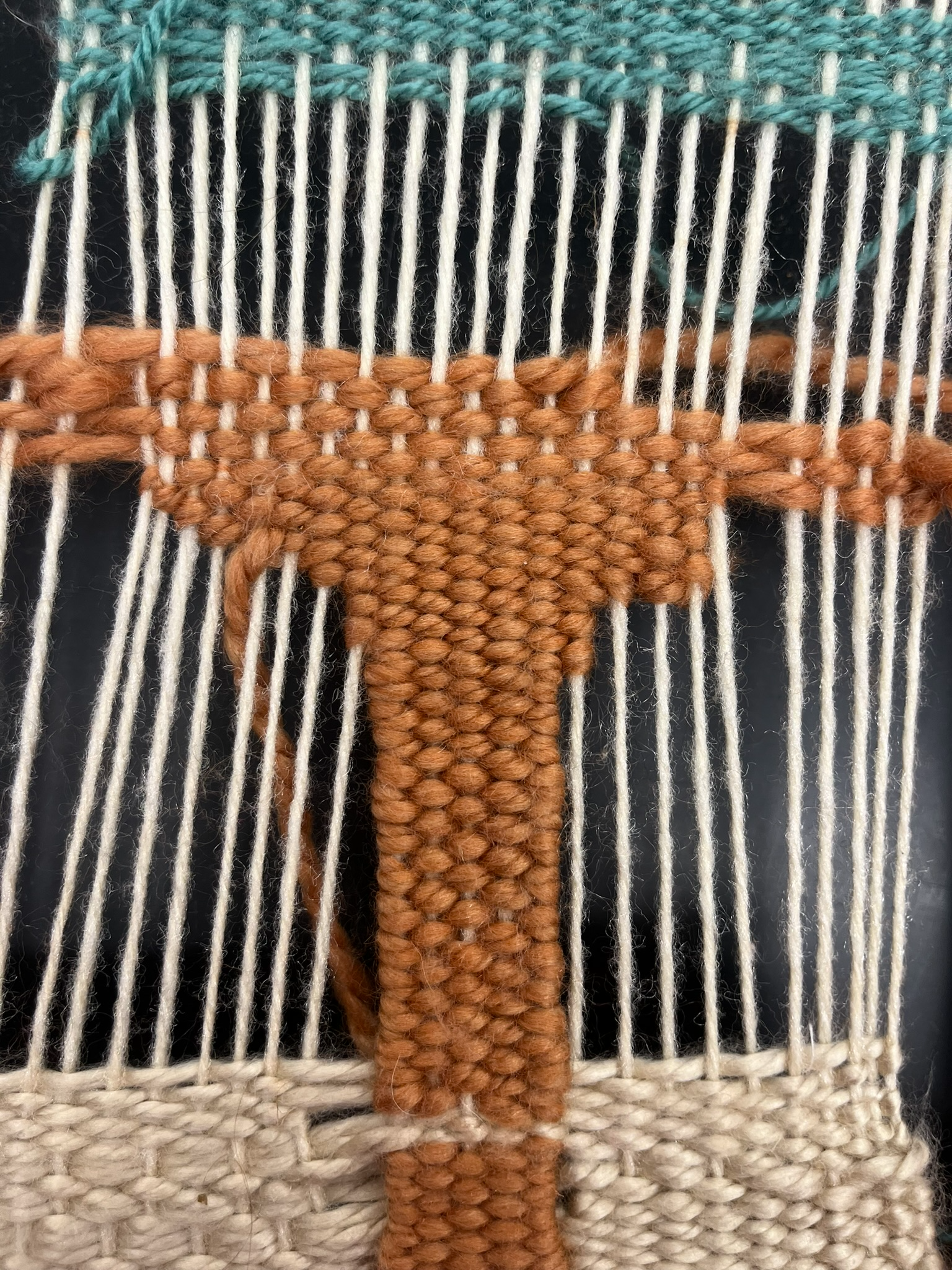
The weaving process was very intricate and time consuming but paled in comparison to spinning. It was a more straightforward process that required alternating thread through loom fibers and was easier to understand at first than spinning and carding. Over time, weaving makes our eyes hurt, and we also found that it was very difficult to get the wool to be tight across the loom, which would prevent gapping between fibers. About 10 stiches, each about half a centimeter in length, could be done in 30 seconds.
| # of stitches | Length of stitches | Time |
| 10 | 10 cm each | 30 seconds |

0 thoughts on “Week 2 Lab Data Group 2: Wool”