
| Nail # | Number of heats to form a shoulder | Number of heats to begin squaring | Number of heats to fit through the hole | Number of heats to begin cutting nail off of rod | Number of heats to complete nail | Total time (hours) |
| 1st | 5 | 7 | 22 | 25 | 29 | 1:15:47 |
| 2nd | 7 | 9 (Time: 0:54:42) | N/A | N/A | N/A | N/A |
| Average | 6 | 8 | N/A | N/A | N/A | N/A |
Between the two data sets, the average number of heats to form a shoulder is 6 and the average number of heats to begin squaring a nail is 8. We were unable to collect the average number of heats for the other steps in the nail-making process because there was not enough time to complete more than one total nail. We can guess that the second nail would have taken more time and total number of heats to complete compared to the first nail because when both forming a shoulder and beginning to square the nail, the second nail took two heats longer than the first nail.
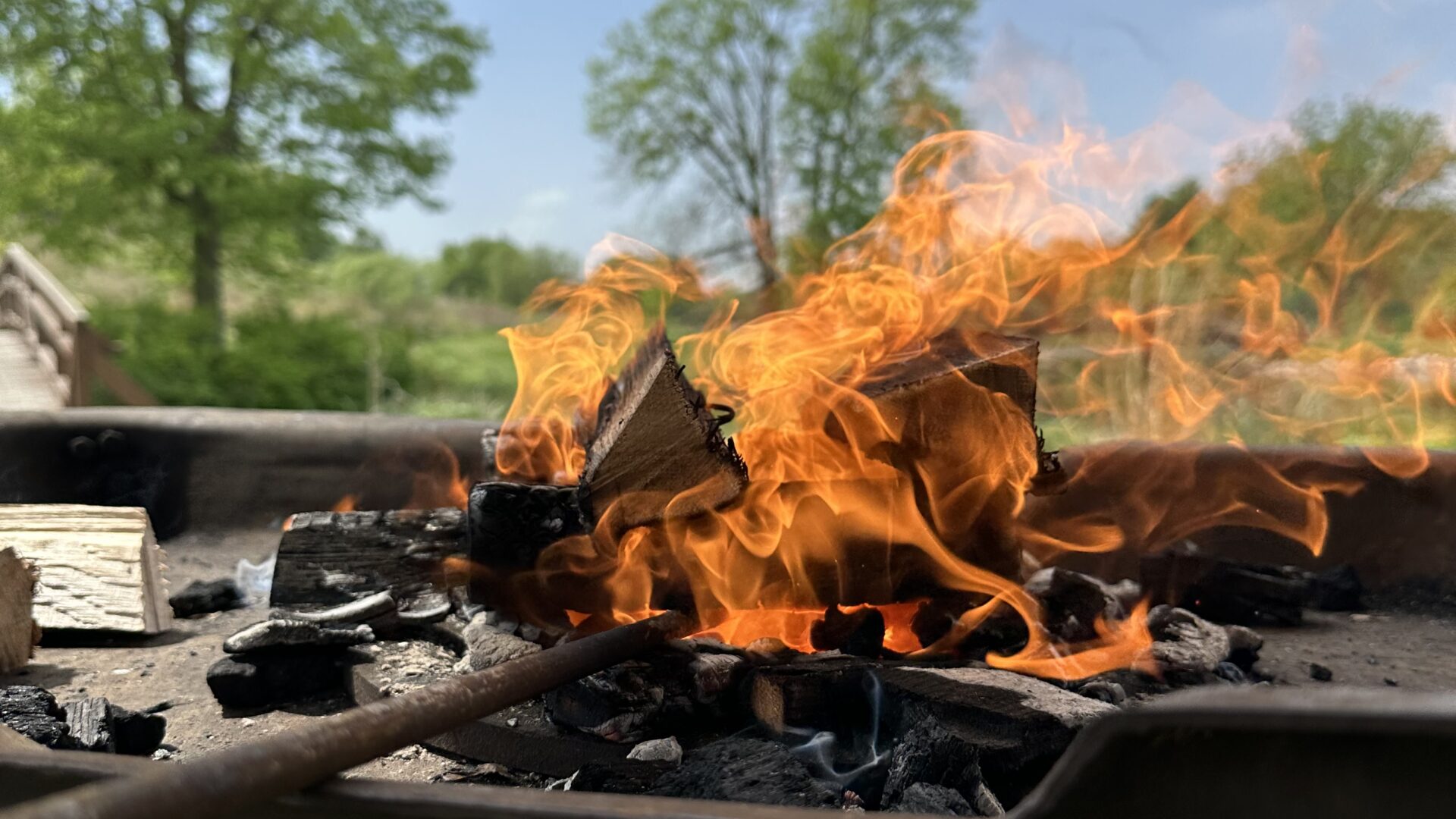
The difference in time in how long it took to begin squaring off the nail between the two nails is due to difficulty heating the metal and keeping the fire going. While making the first nail we had more wood already chopped into smaller pieces and ready to be put in the fire, so we were able to feed it continuously. While making the second nail, we had used up all of our previously chopped wood and the majority of the logs left were too large to fit into the wood splitter. Because of this, we had to burn the larger logs, which took longer, and so the fire took longer to heat the metal to the point that it could be shaped. Generally, the second nail was being hammered at a cooler temperature, which we were able to tell by the color of the metal, which meant that it took more heats to craft it into the desired shape.
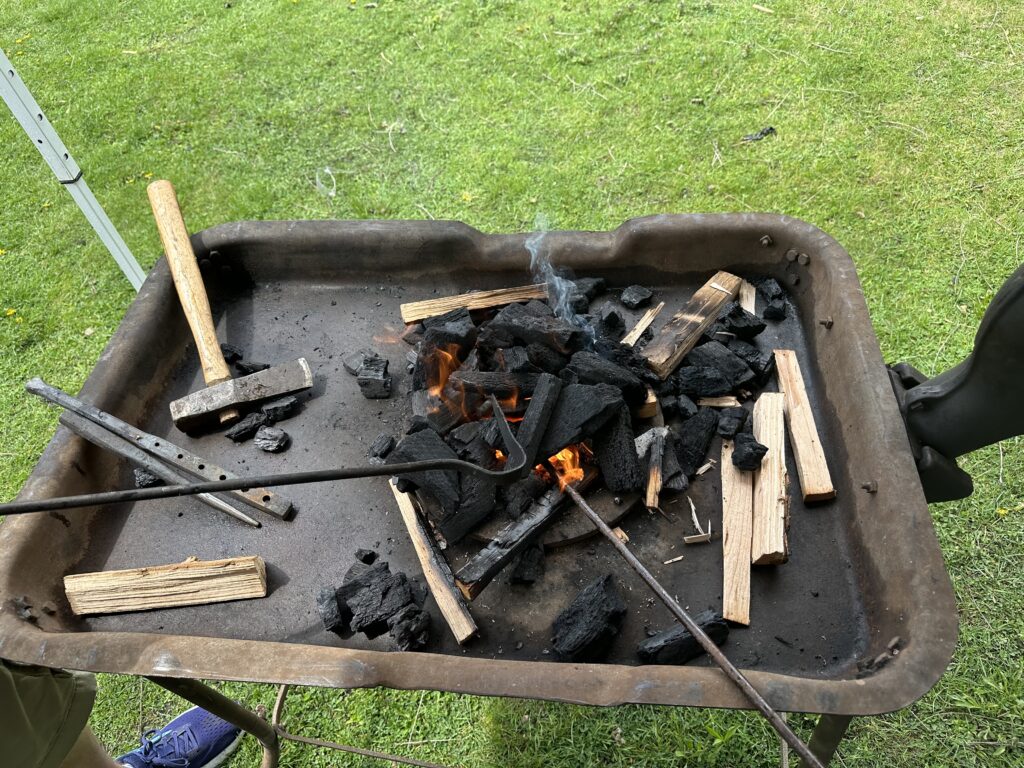
This photo is from the making of the first nail, when we had more smaller pieces of wood.
We were unable to collect any temperature data because the process moved too quickly. The metal had to be hammered immediately after being taken out of the fire because it cools so quickly and so we would have had to drastically slow the process to get an accurate temperature reading on the thin piece of metal. This would have changed both the timing data and the data collected on the number of heats that each step took, because the metal would have cooled by the time the temperature was taken and would have had to be put back into the fire more times.

0 thoughts on “Week 7 Lab Data: Blacksmithing (Group B)”