

This lab was split up into a few stages: set-up, procedure part 1 (split up into 5 smaller steps), and procedure part 2 (with two options, either making mozzarella or making whey cheese).
Set-up
The setting up stage took almost half an hour; it included everyone arriving, discussing what was going to happen, and setting up the work stations.
Part 1
This stage was the process of making curds and then separating them from the whey. It was split up into 5 sets of steps.
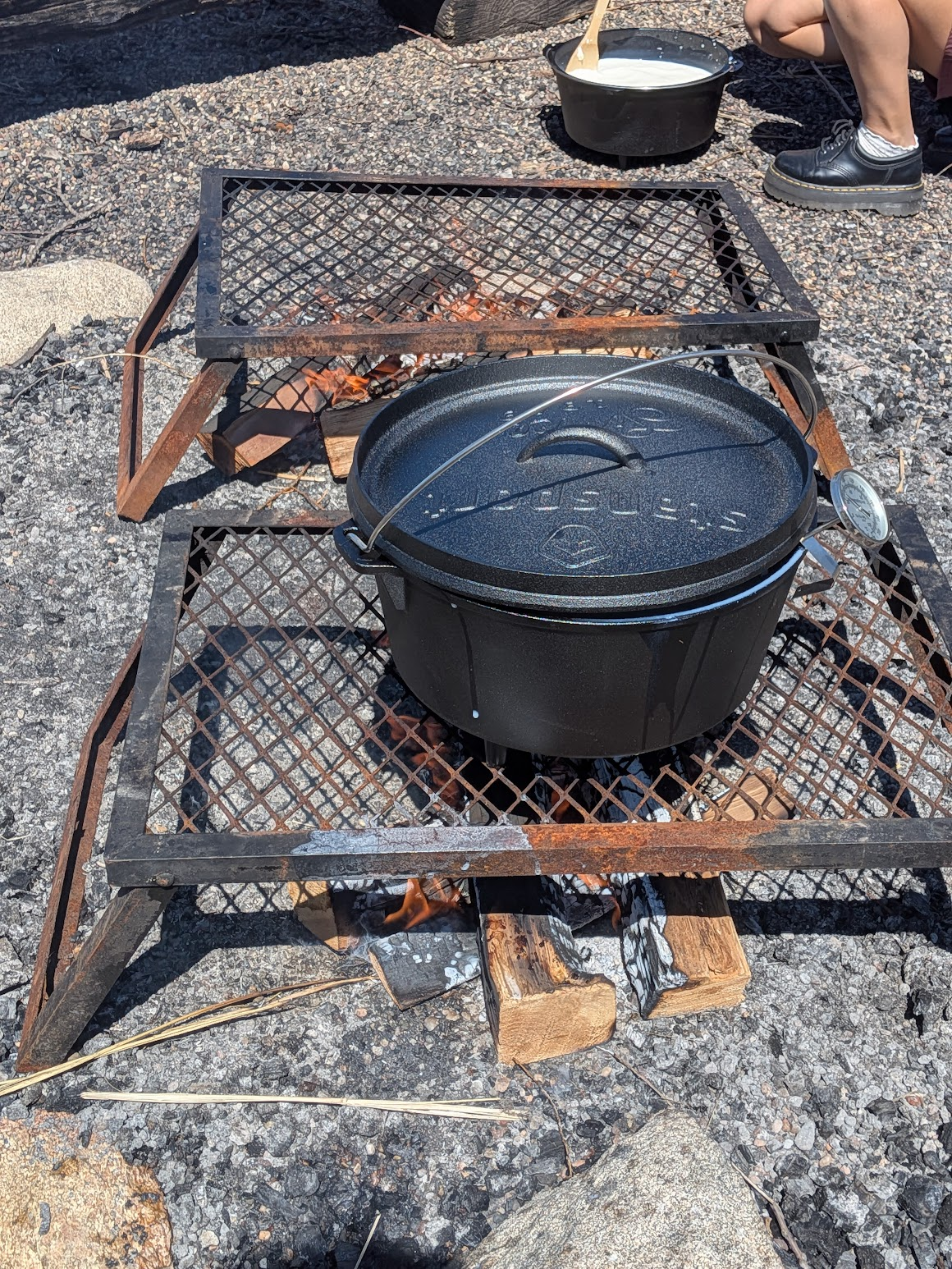
1) We dissolved 1 rennet tablet in ¼ cup of water. It took about 6 minutes and 30 seconds to dissolve (we stirred and crushed it with a finger and also just let it sit by itself for most of these 6 minutes). We put 3.901kg of milk into our pot. Then we added ¼ cup of vinegar and 2 cups of water into the milk. Then we placed the pot over a fire. All of this took us about 17 minutes.
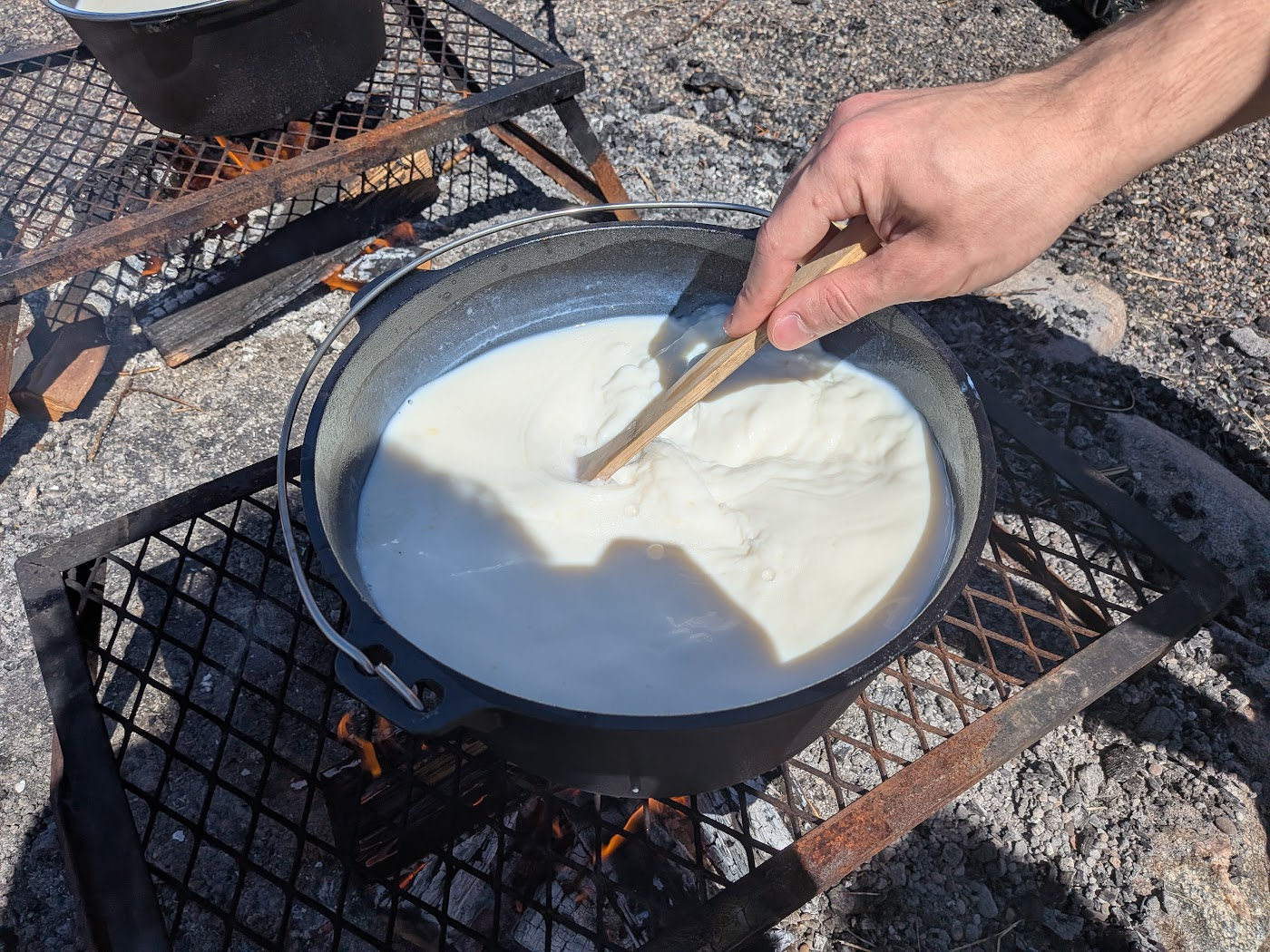
2) We waited for the milk to reach 90°F. This took about 13 minutes. Then we added the rennet-water to the milk. We took the pot off the fire. The temperature was reading 100°F. After adding the rennet-water we waited 35 minutes before it was time to check for the clean break. In total, these steps took us 48 minutes.
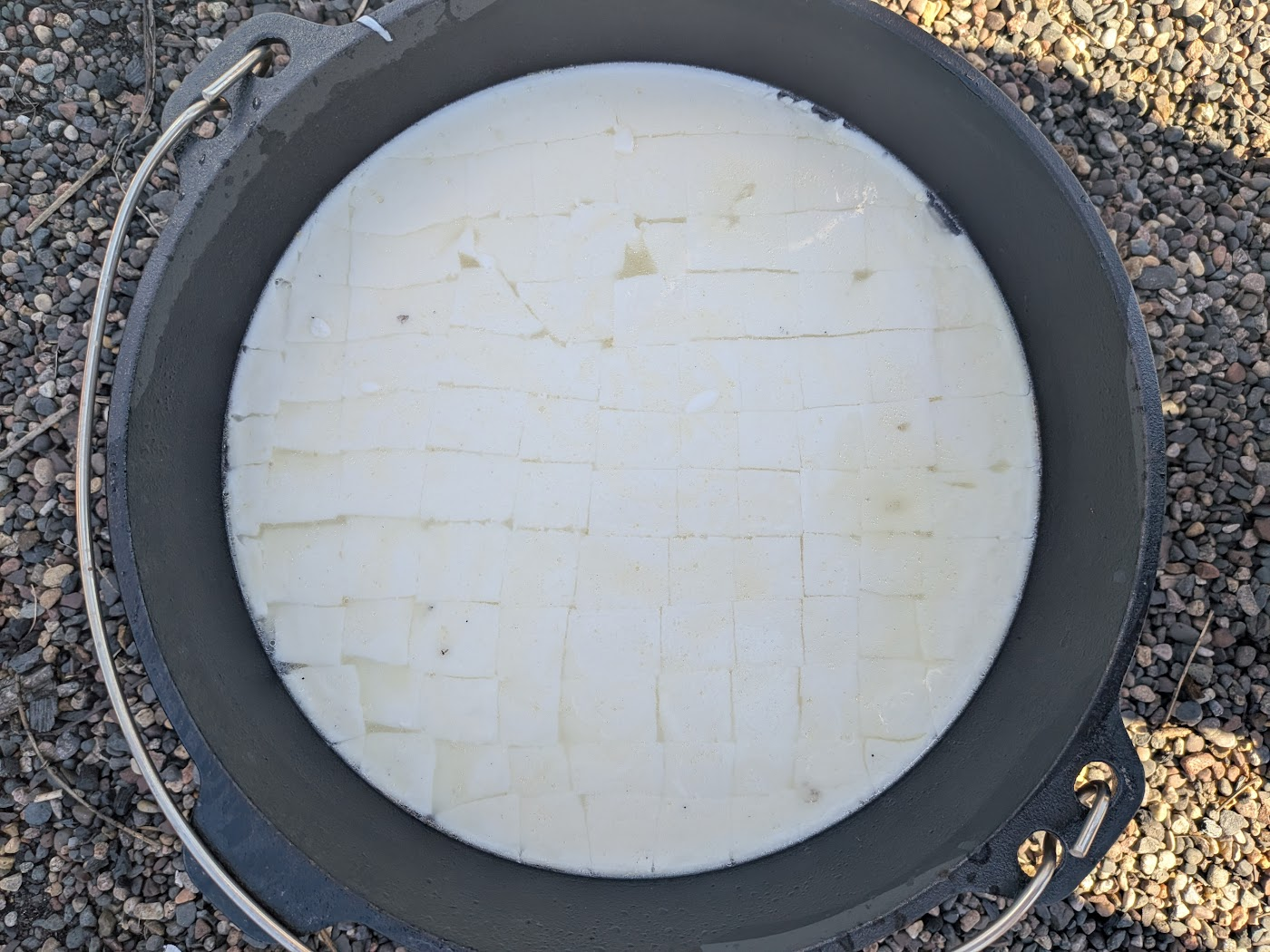
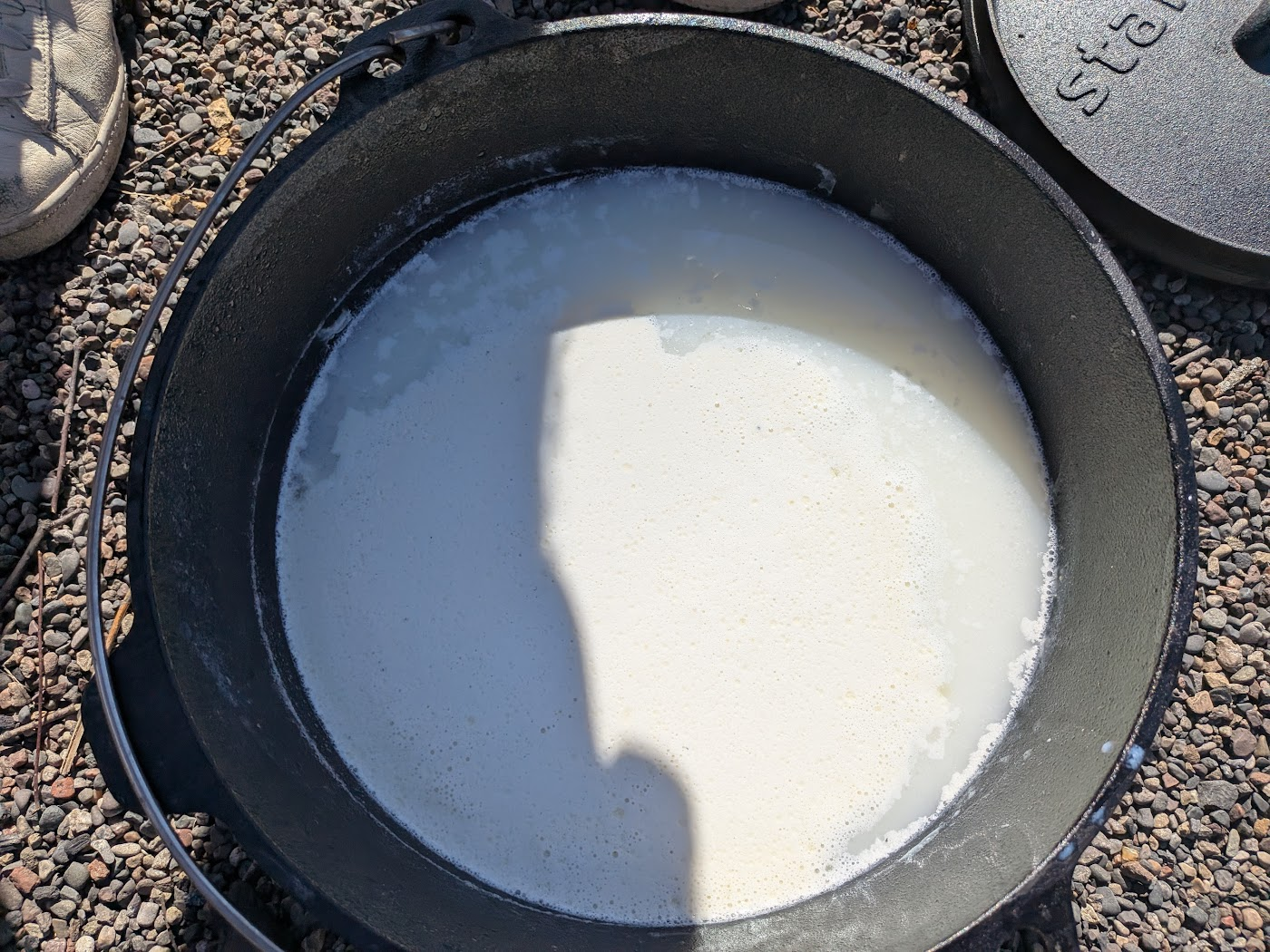
3) We checked for the clean break, and it was beautiful. It was ready to be cut into strips. We waited 11 minutes (although the instructions said wait 15 minutes) and the temperature stayed at 100°F (although the instructions said to maintain a 90°F).
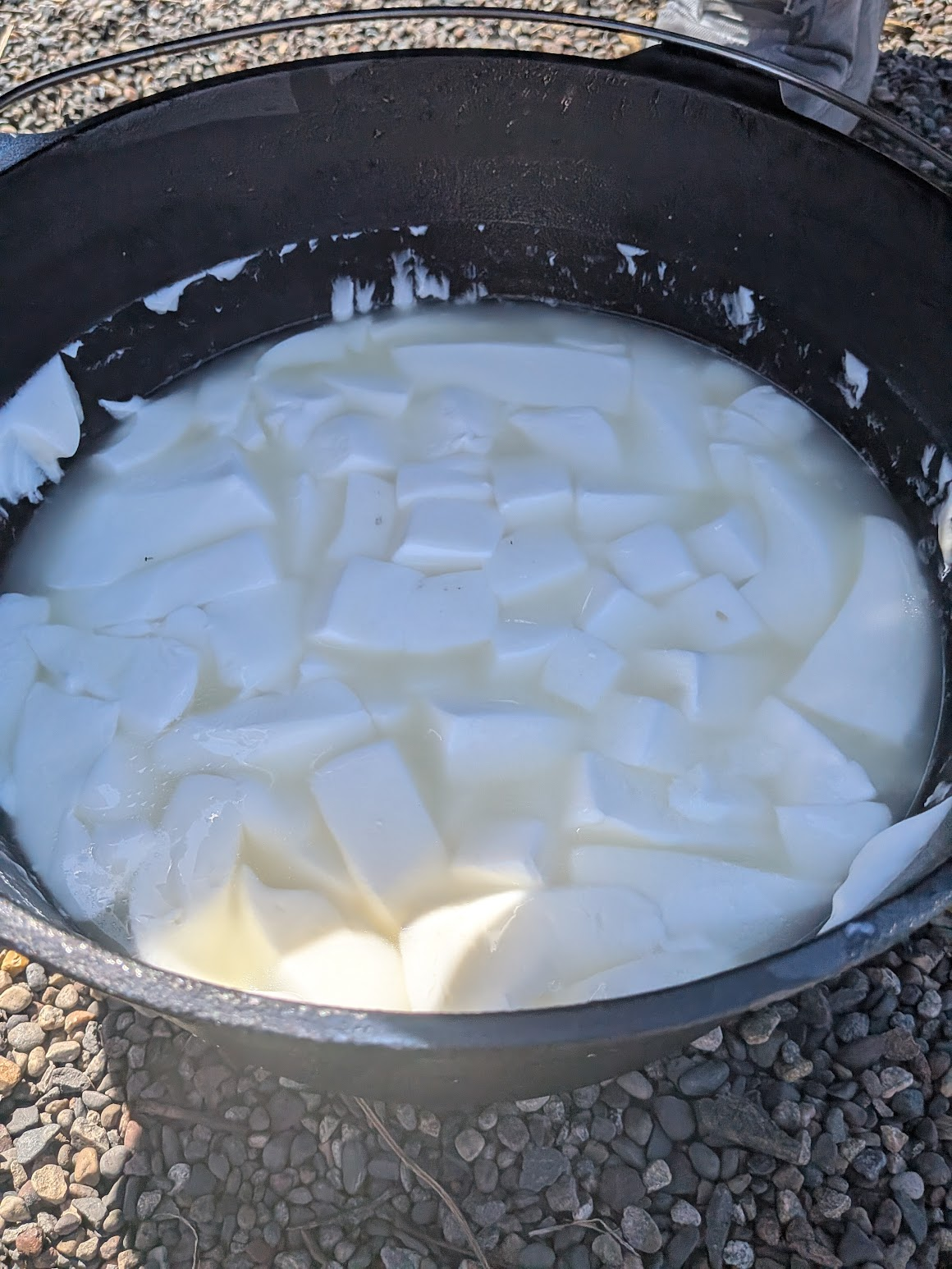
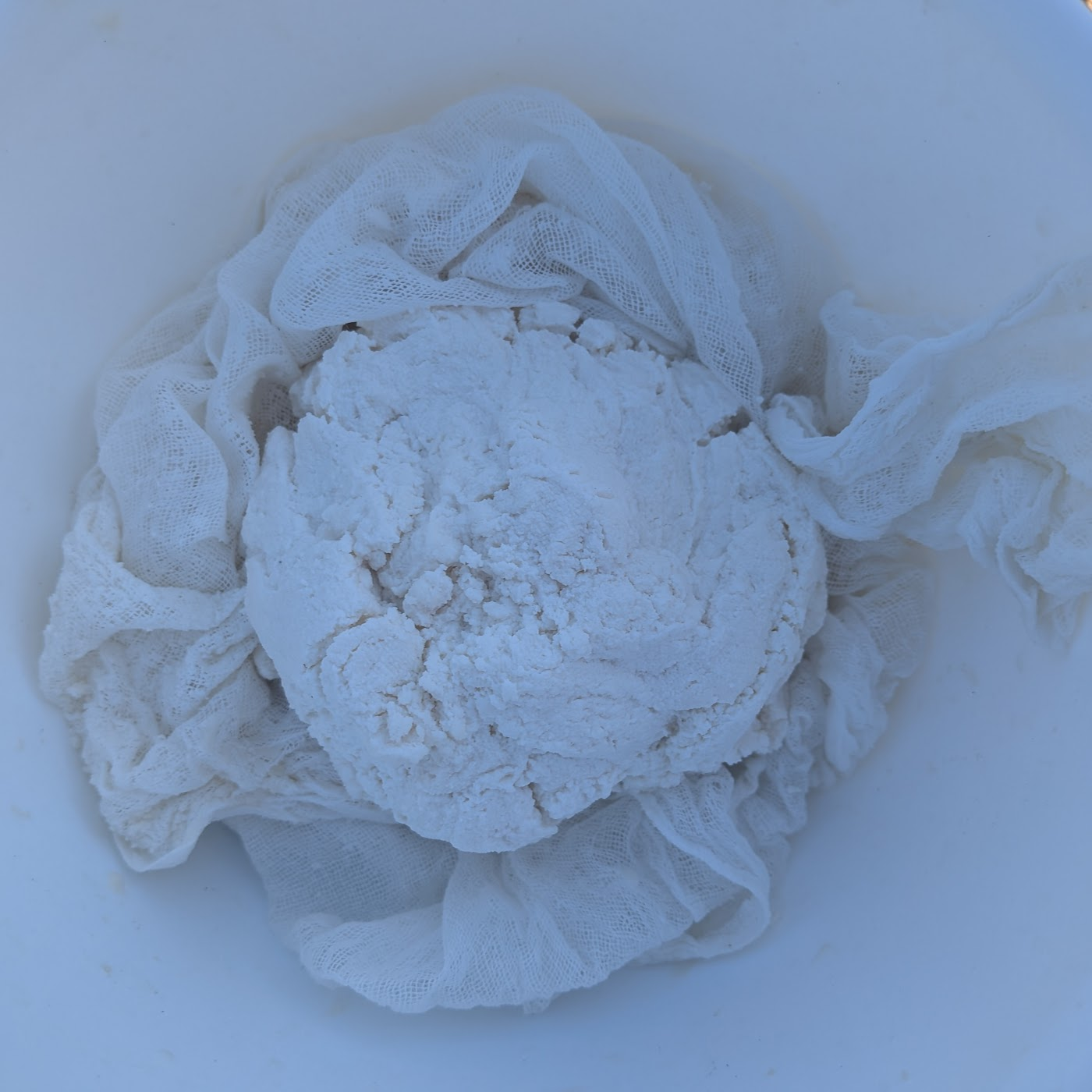
4) Next, we lined a colander with cheesecloth and placed it on top of a funnel that was placed on top of a large mason jar. We poured the pot contents into the strainer to separate the curd from the whey. We used two jars for the whey. This was a messy process; we lost curds and whey to the ground and our bodies. This straining/separation process took 17 minutes.
5) We weighed how much whey and curd we produced. We had 3.084kg of whey and 0.559kg of curds. All of part 1 together (making curds, separating from the whey, and measuring) took about 1 hour and 45 minutes.
Part 2
After making the curds we could either turn the curds into mozzarella or turn the whey into ricotta. My group turned our whey into ricotta.
We started by placing the pot of whey over the fire to attempt to heat it up to 160°F. While we waited for it to heat up, we calculated 12% of the whey to see how much milk we should add to the whey. We calculated that much milk would be 0.375kg. The problem is, looking back over the lab notebook, this number is wrong. It is not 12% of the whey. When incorporating one of the whey jars into the calculation, I misread a number as 2.792kg instead of 2.748kg (because 0.792kg was written above 2.748kg as the jar weight). If I had not misread the numbers we should have added 0.37kg of milk. This miscalculation did not matter as it was only 0.005kg off and we weren’t that precise anyway.
We waited for 24 minutes for the pot to heat up before pouring the milk in 0.375kg. We wanted the temperature to be 160°F but we ended up putting it on at 140°F.
Next, the instructions said to add ½ teaspoon salt at 170°F. We added the salt 3 minutes after the milk while the temperature was still at 140°F. We guessed how much ½ teaspoon of salt was. Right after the salt, we added a little less than ¼ cup of vinegar while the temperature was still at 140°F (even though the instructions said it should be between 185 and 200°F). Then, the temperature went down to 120°F so we added more wood and it went back to 140°F.
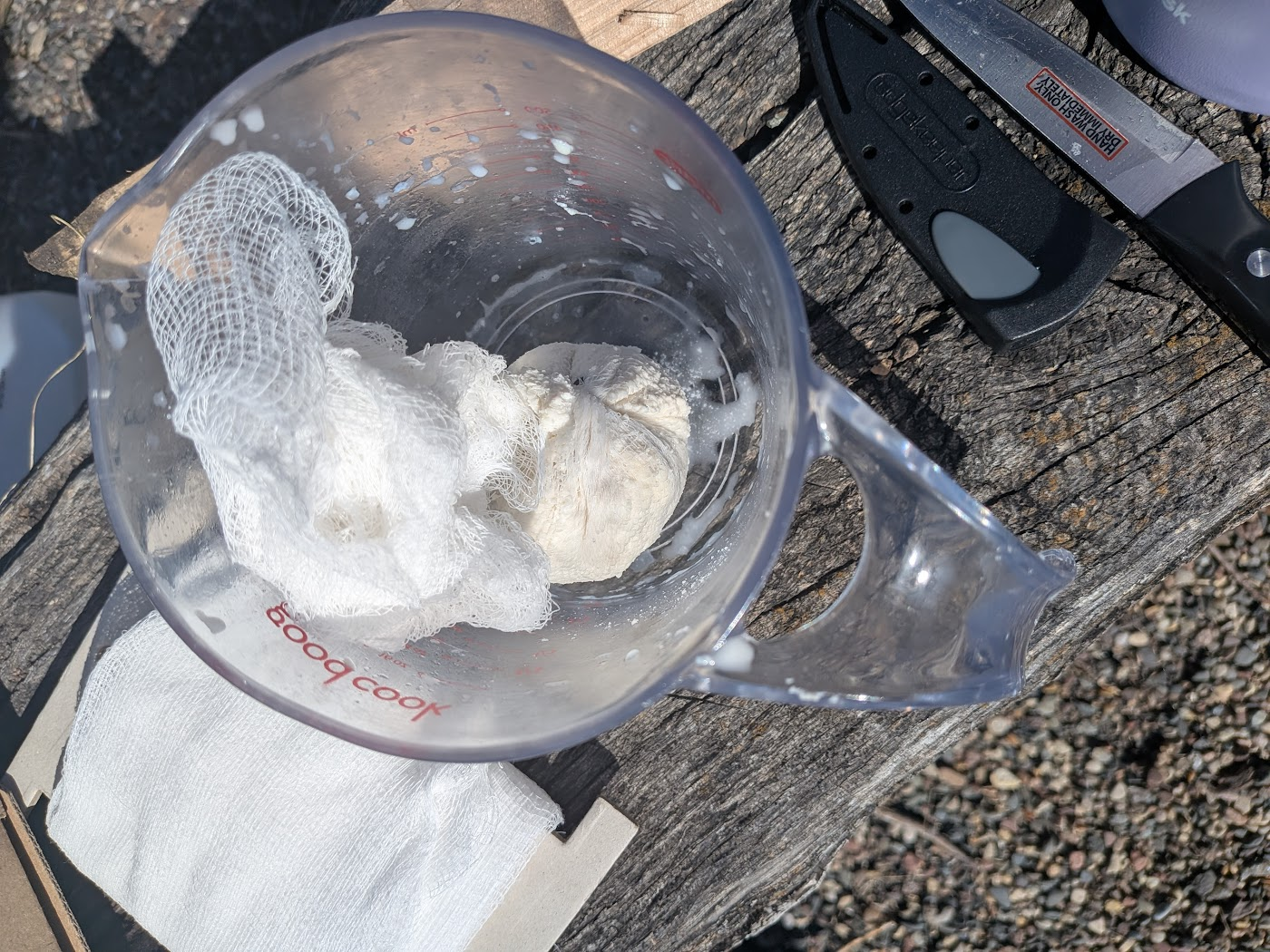
After 40 minutes of the pot being on the fire, we took it off because it was time to separate the ricotta from the whey. We used a smaller strainer as a scooper and a plastic ladle. The separation process took about 13 minutes. So, in total it took 53 minutes to make our whey cheese.
The ricotta weighed 0.083kg. The whey weighed 2.933kg.
Looking back at the instructions on making whey cheese and what we actually did, I realized we did not follow the timing, measurements, or desired temperatures that well. However, we did not have trouble with the process or the final product. We made a decent whey cheese.
So with 3.901kg of milk, we produced 0.559kg of curds and 3.084kg of whey. With this 3.084kg of whey and 0.375kg of more milk, we made 0.083kg of ricotta and had 2.933kg of whey left.

0 thoughts on “Week 3 Lab Data Group 1: Cheese”