
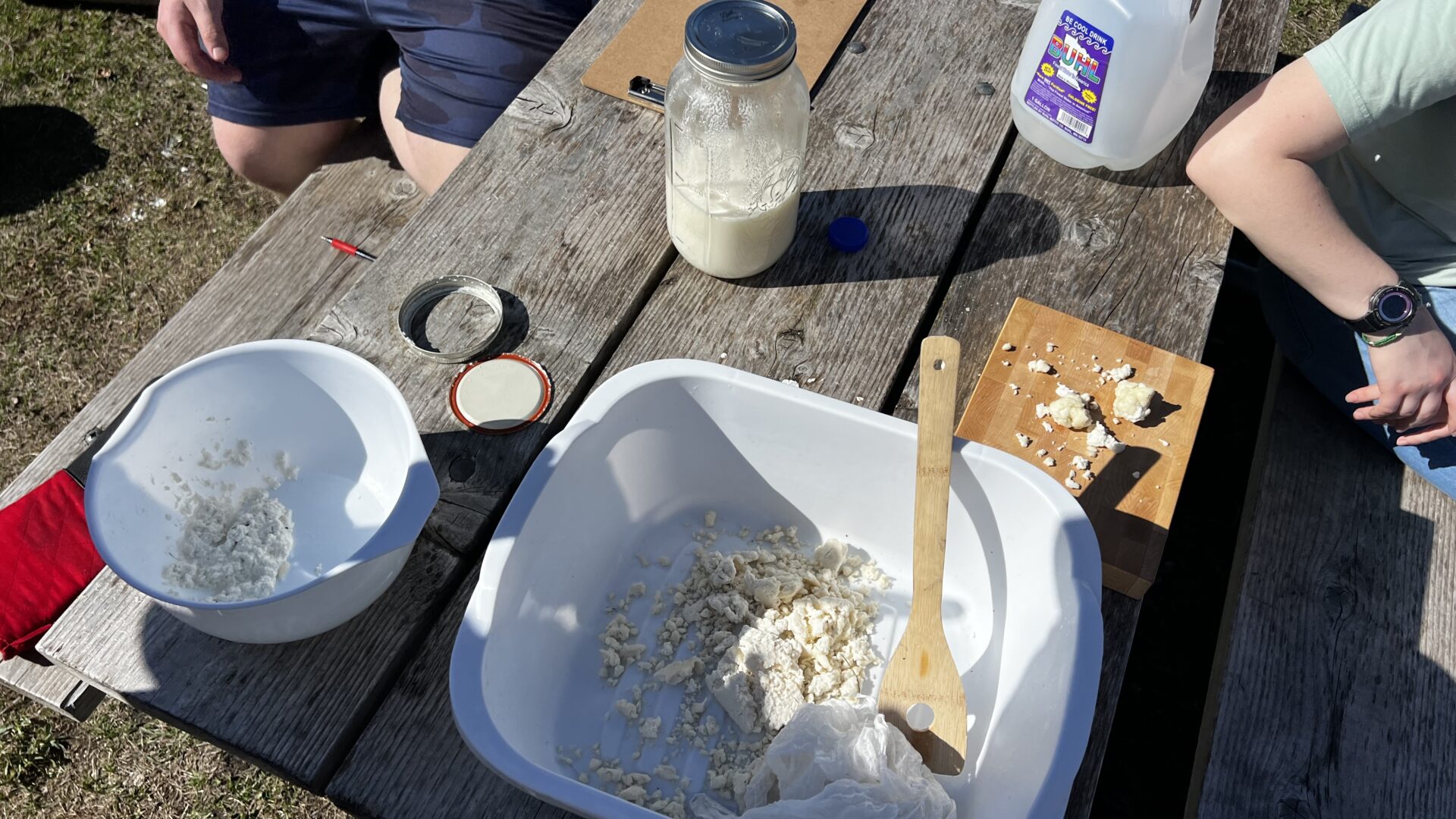
During this lab, we learned how cheese was produced from milk supplied directly by shepherds to local cheesemakers. Two types of cheese were produced during this lab: a soft cheese, ricotta, and a harder cheese, mozzarella. The lab began with us creating curds and whey, which would be used in the mozzarella and ricotta production.
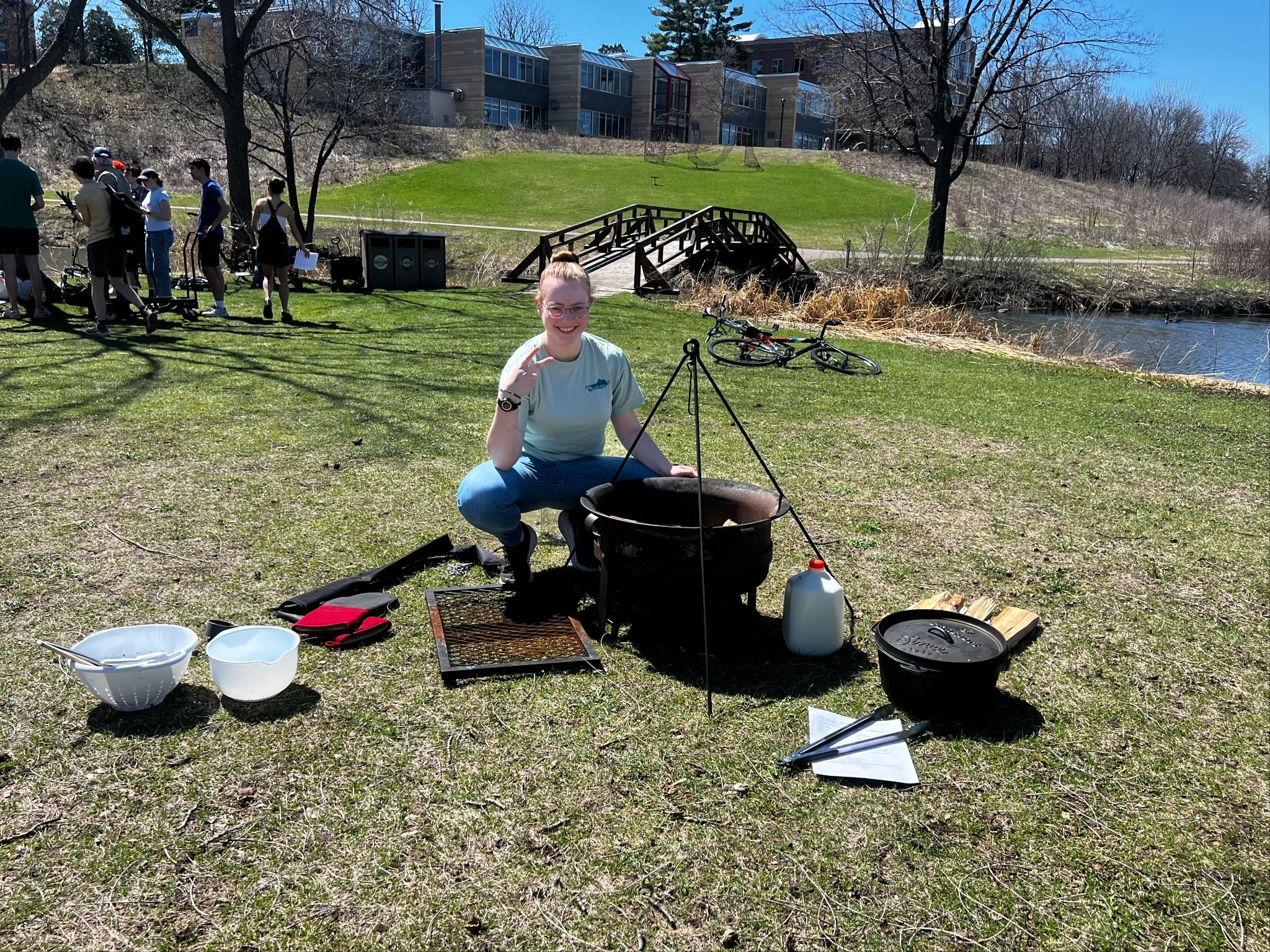
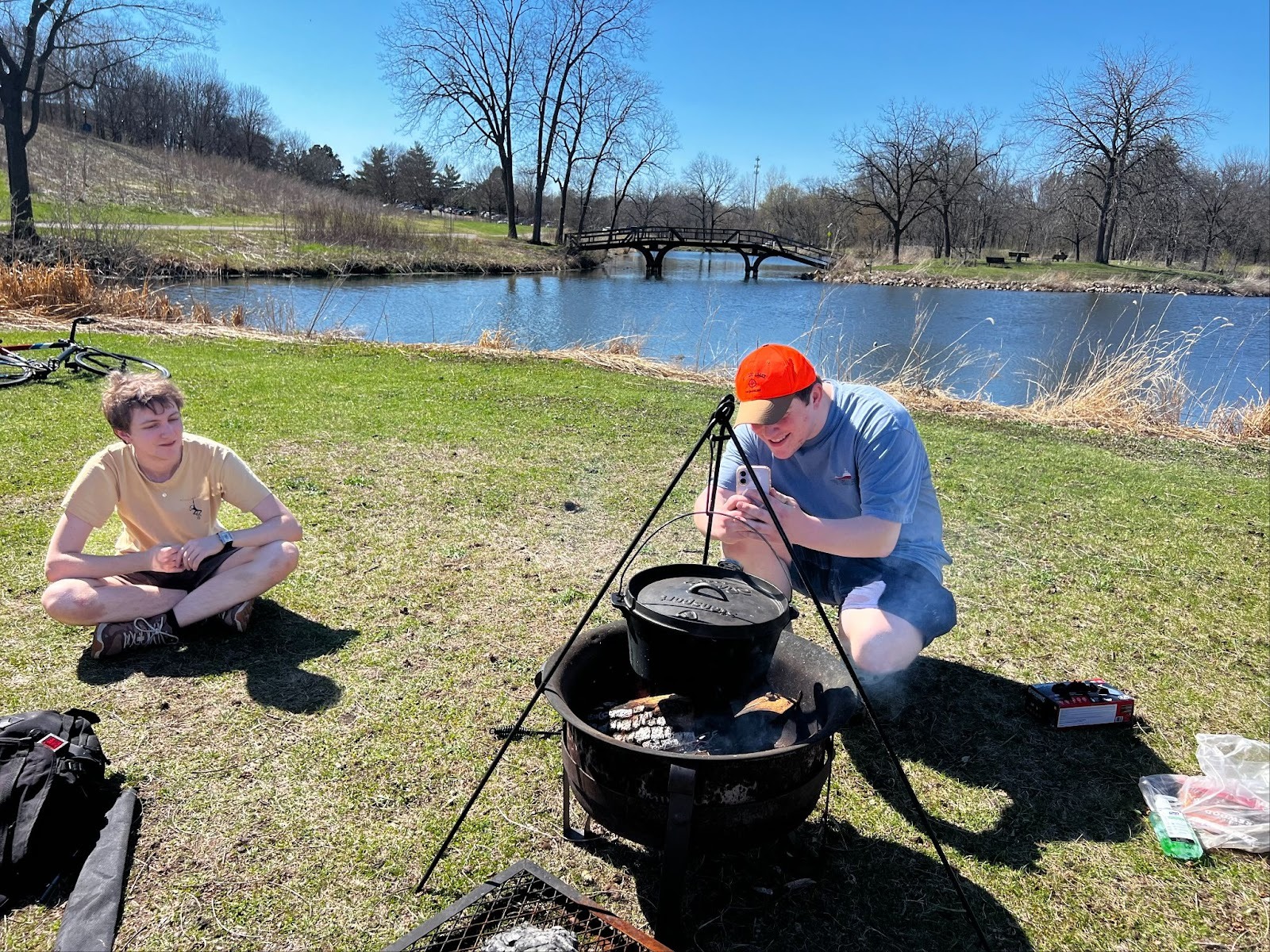
The lab began on Mai Fete Island as we looked for a location to set up our lab group. We each first confirmed our group’s checklist of materials, which included a pot basin for building our fire. We were in a windy area, and our kindle/fire starter was not catching, and our fire kept dying, so we continually needed to get the lighter from other groups. After about five minutes, we were able to sustain our fire.
Mozzarella Cheese Making
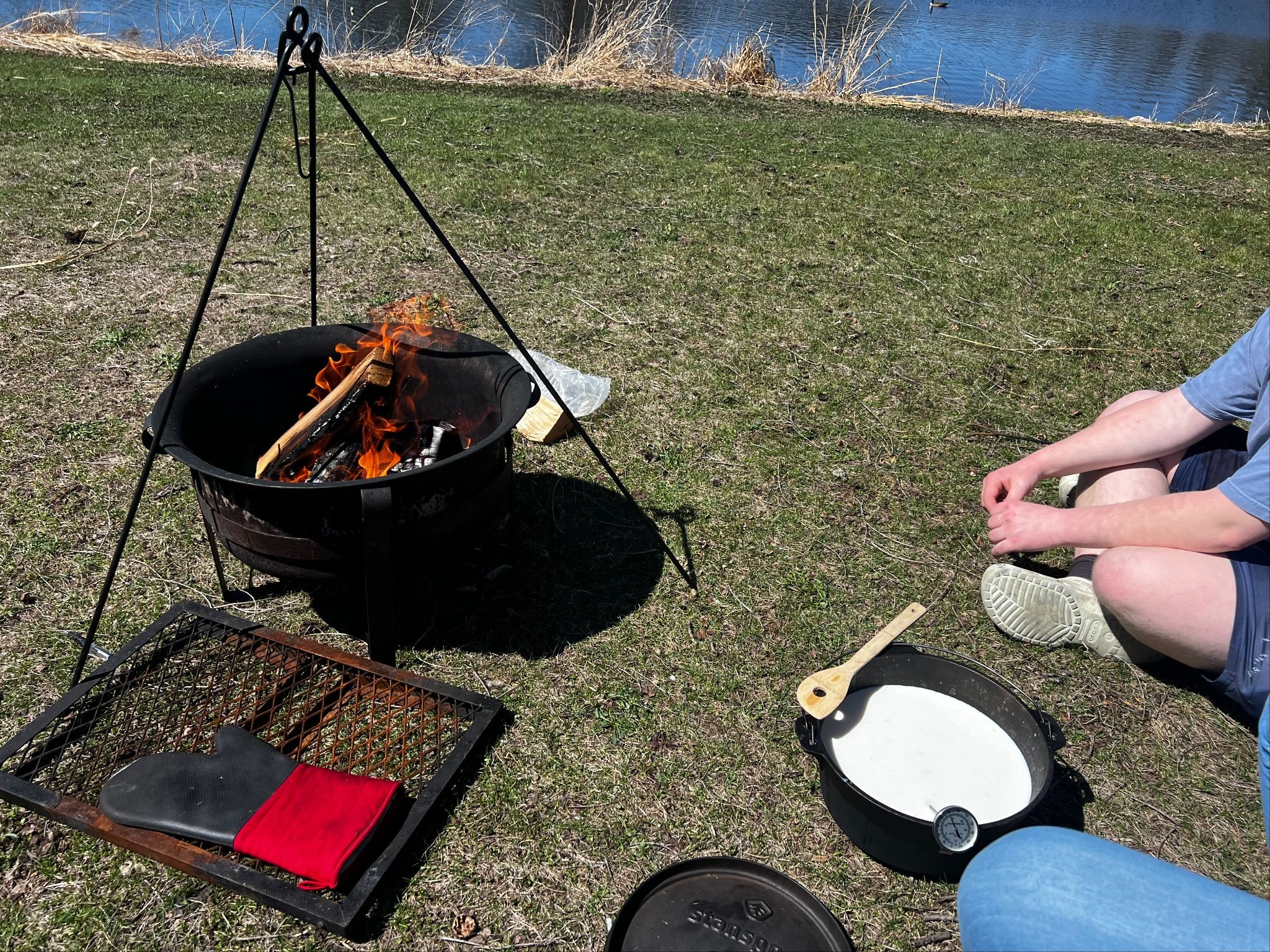
We preheated a pot and dissolved a rennet tablet in water. This enzyme is typically found in the fourth stomach of a calf still only consuming milk. We poured a gallon of milk into the preheated pot, then added a mixture of ¼ cup distilled vinegar and 2 cups water to the milk. The pot was placed on a stand, so it hung over the fire. We attached a thermometer to monitor the temperature.
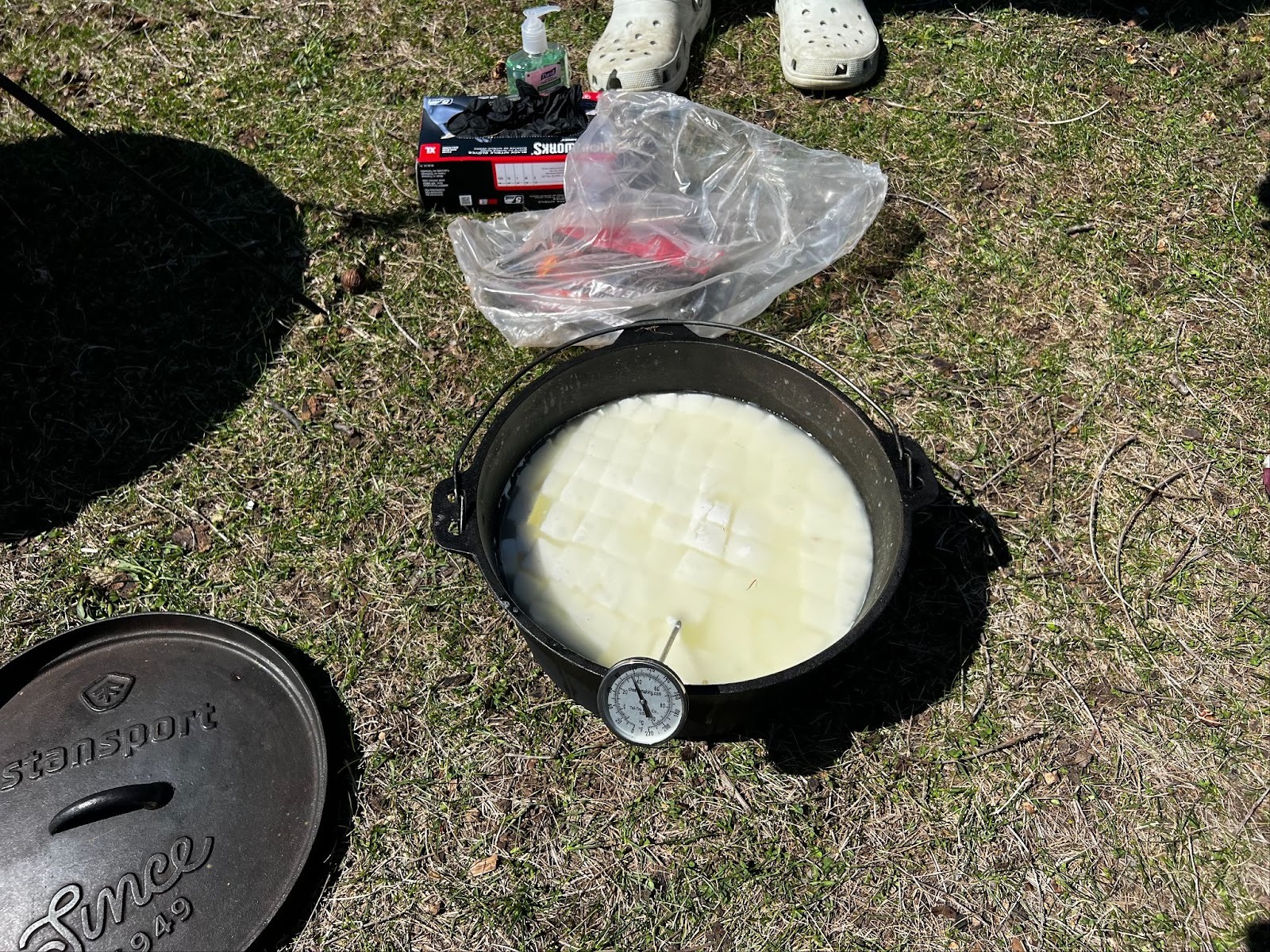
When it reached 90 degrees farenhight, we added the rennet water and removed the film to attempt to keep the temperature. However, the temperature spiked to 110 degrees when we took it off. We placed a lid on the pot when we took it off the fire, so that might be why the temperature spiked. We let the mixture sit for 30 minutes and tested the cheese by placing a finger into the mixture and pulling it up at a 45-degree angle. If it broke, we knew that it was ready to be made into curds. Our group was the first group to have curds form. We cut the cheese into cubes. We place the cubed curds back on the fire to maintain a temperature of 90 degrees. We removed it after it reached 95 degrees, and we kept stirring while it cooled because it spiked to 100 degrees. Even though we had these spikes in temperature, it didn’t really affect our cheese, which makes sense because thermometers were not historically available.
Quantitative Data – Mozzarella
| Time (minutes: seconds) | Temperature(highest) °F | Other | |
| Beginning | 0 | 80°F | Milk, vinegar, and water are added at the beginning |
| On the fire | 1:52 | 110°F | Rennet water added at 90°F |
| Off the fire | 31:34 | 92°F | At the 30-minute mark, we tested to see if the cheese was coagulated to cut into curds |
| Back on fire | 2:51 | 95°F | |
| Off fire again | 10:56 | 100°F | Stirred to cool |
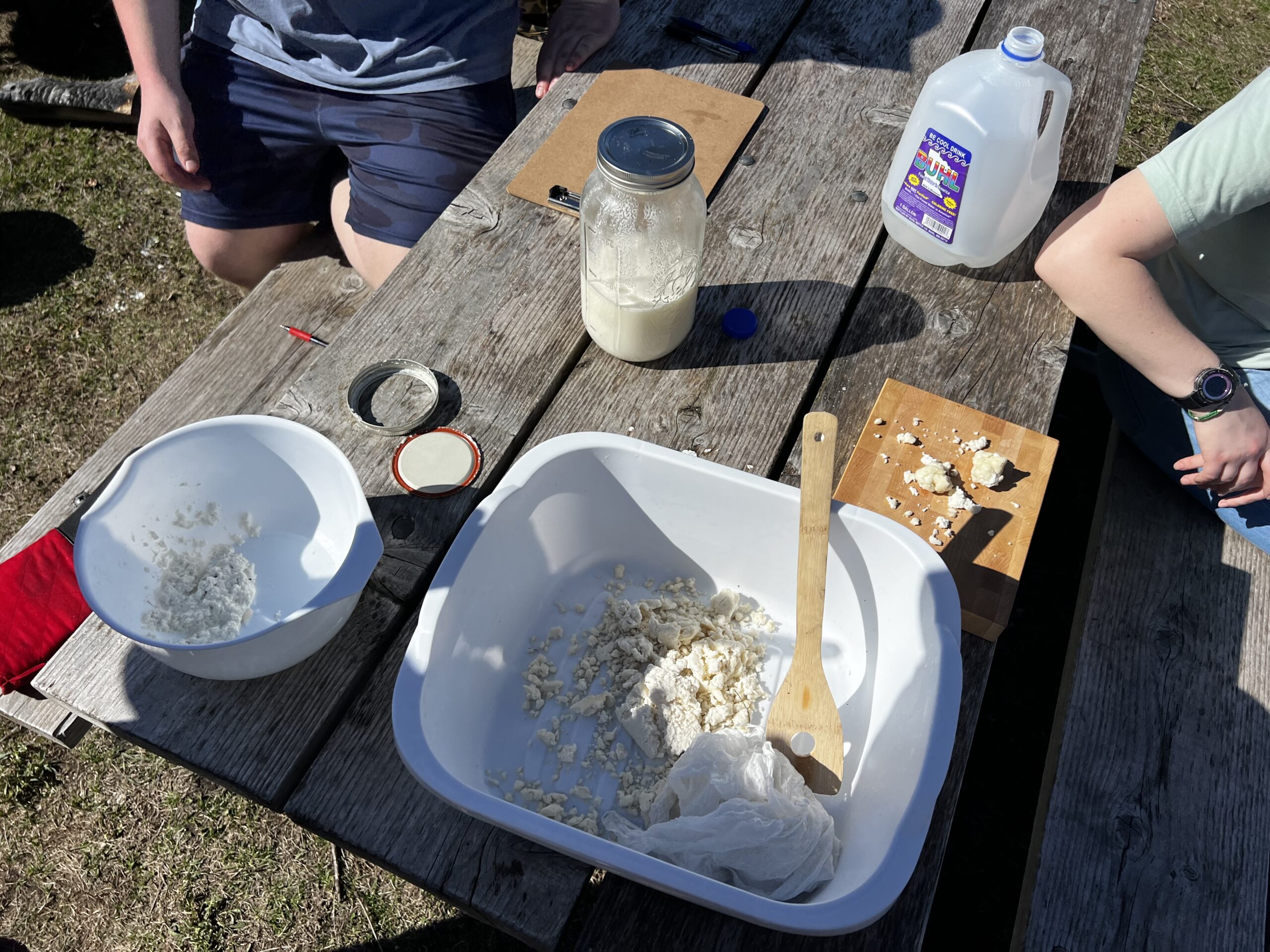
We then strained the curds, saved the whey in a glass jar for ricotta cheese, and used the solid curds to begin mozzarella production. We squeezed the remaining whey from the curds to make them as dry as possible and create a “dough”- like ball. We then cut them into 3 cm slices and placed them in a salted whey solution for 5 minutes to dry out the cheese. Unfortunately, our cheese did not really pull apart. It was either that it was not in the salted whey solution long enough, or that the solution temperature was not high enough. We left the mozzarella out for the rest of the lab, and our cheese did get harder.
Ricotta Cheese Making
We made ricotta by pouring the whey into a pot over the fire, heating it to 160 degrees, and adding milk at a milk-to-whey ratio of 12%. At 170 degrees, we added a pinch of salt. When it reached a temperature between 180 and 200 degrees, we added 2 to 4 tablespoons of vinegar. As curds formed, we brought the curds to the middle of the pot, which allowed more curds to rise up from the bottom. This separated the curds from the whey.
Quantitative Data – Ricotta
| Time(minutes: seconds) | Temperature (highest) °F | Other | |
| At the start | 0 | 90°F | Added whey |
| On the fire | 27:52 | 160°F | Added milk |
| On the fire | 5:21 | 170°F | Added salt |
| On the fire | 7:00 | 180°F | Add vinegar |
| Removed from fire | 11:07 | 200°F |
Total Weight – Curds and Whey
| Total Curds(g) | Total Whey(g) | |
| Mozzarella | 521g | 3,548g |
| Ricotta | 144g | 2,563g |
Summary
It was a fun lab. Everyone enjoyed themselves, and we learned that a great deal of time is required to make cheese, and the quality of the cheese was not guaranteed. Our group preferred the taste and texture of the ricotta. We all felt that our mozzarella was too bland and squeaky.
Qualitative Data – Feelings About the Lab
| Good (number of members) | Why | |
| Start | 4 | Good weather |
| Midway | 4 | Fun |
| Near end | 4 | Interesting |
| End of lab | 4 | Enjoyable |
Qualitative Data – Consistency of the mozzarella squeezed curds
| Slimey |
| Mozzarella cheese |
| Bumpy |
| Wet playdough |
Qualitative Data – Smell of the whey
| Nothing |
| Skim milk |
| Hot milk |
| Babies |
| Kraft cheese |
Qualitative Data – Experience with the cheese – Mozzarella
| Taste | Texture |
| No taste – bland | Squeeky |
| Tastes better with salt | Dried out |
| Not a fan – needs more salt | Rubbery |
| Did not like the taste |
Qualitative Data – Experience with the cheese – Ricotta
| Taste | Opinion |
| Smokey | Liked this ricotta more than other ricotta |
| Tastes like raw pasta | Not a fan |
| Like the ricotta more than the mozzarella | |
| Like the ricotta |

0 thoughts on “Week 3 Lab Data Group 3: Cheese”